Iran braces up for aftermath of Trump deadline

An Iranian minister said on Wednesday the country needs $180 billion of investment to lurch ahead at a steady growth rate of 8 percent amid uncertainty because of hostile US rhetoric.
“Part of this has to come from the resources that the country produces itself and part of it from foreign investment, for which we have to do more work in order to reach the target of $20 billion of investment per year in the industrial sector,” Minister of Industry, Mine and Trade Mohammad Shariatmadari said Wednesday.
Since August 2013 when President Hassan Rouhani came to office, Iran has absorbed $9.7 billion of investment “which shows the policies adopted by the government in attracting capital held by Iranians abroad as well as foreign capital are working”, he told a conference in Tehran.
Iranian authorities complain that a landmark nuclear deal has failed to direct foreign investment flow to the country in the face of US threats.
A mid-May ultimatum set by US President Donald Trump for possible withdrawal from the deal looms large, with Iranian officials traveling to the countries which are presumably under less American sway.
Foreign Minister Mohammad Javad Zarif is currently leading a large delegation of Iranian businessmen and politicians on a Balkan tour to explore grounds for trade links.

In Serbia Monday on the first leg of the tour, Zarif touted Iran’s enduring security in a volatile region, saying the Islamic Republic has withstood US sanctions and other problems plaguing the Middle East.
“Despite all the shortcomings and problems, it is the calmest and safest country in the region,” Zarif said of Iran.
Serbian Minister of Trade, Tourism and Telecommunications Rasim Ljajic said the two countries were negotiating a free trade agreement and a payment system, for which a decision will be made in the first half of 2018.
Ljajic said Iran should invest in the Serbian economy and invited Iranian businessmen to use Serbia as a hub for their investments in the western Balkan region.
Tehran already appears to be shifting to the east after repeated complaints by Iranian officials that the west, notably Europe, was not making a serious pitch for business with the Islamic Republic.

The 2016 nuclear agreement has served as a litmus test on the long-held view by some Iranians that the west is not acting in good faith.
Independence constitutes a central tenet of the Islamic Republic, requiring that the country never fall under the sway of outside powers. With that in mind, the country has taken a pragmatic and flexible approach in its foreign policy.
However, each conciliatory gesture by Tehran has been answered with hostility by Washington which has a history of mistreating Iranians even when the country was an ally of the United States.
The Europeans, meanwhile, are unlikely to stand up to the US. There are already reports that they want to incorporate some of Trump’s demands into the nuclear deal so that he does not leave it. Tehran rejects any change to the agreement.
The nuclear accord has cemented Iran’s relationship with Russia and China and an increasing number of Asian countries, under the conviction that they treat Iran better than the Europeans and the US.
Russia’s Energy Minister Alexander Novak has said Iran could join an emerging economic bloc that it leads as early as May in a move that could eventually help both nations dodge the impacts of US-led economic sanctions they face.
Novak was quoted by media as saying that Iran’s membership in the Eurasian Economic Union (EEU) could help the expansion of bilateral trade and investment between Tehran and Moscow.
“The move to enter into a temporary agreement making for a free trade zone to be set up between Iran and the Eurasian Economic Union, which is currently at an advanced stage, will obviously trigger further development of our bilateral trade and expansion of investment cooperation,” said Novak, who is also co-head of the Russian-Iranian intergovernmental commission.
Behrouz Hassanolfat, the director of Europe and Americas Department of Iran’s Trade Promotion Organization, was quoted by Iranian media as saying that an agreement with the Union’s member states would be signed as early as February 2018.
Russia’s President Vladimir Putin said last August that Moscow wanted Iran to join the EEU – a move that was seen as crucial in bringing the two countries closer in their plans to form a strategic partnership.
President Hassan Rouhani is just back from a three-day state visit this month to India where the two sides signed a raft of agreements including Tehran leasing to New Delhi operational control of part of the Iranian east coast port of Chabahar for 18 months.
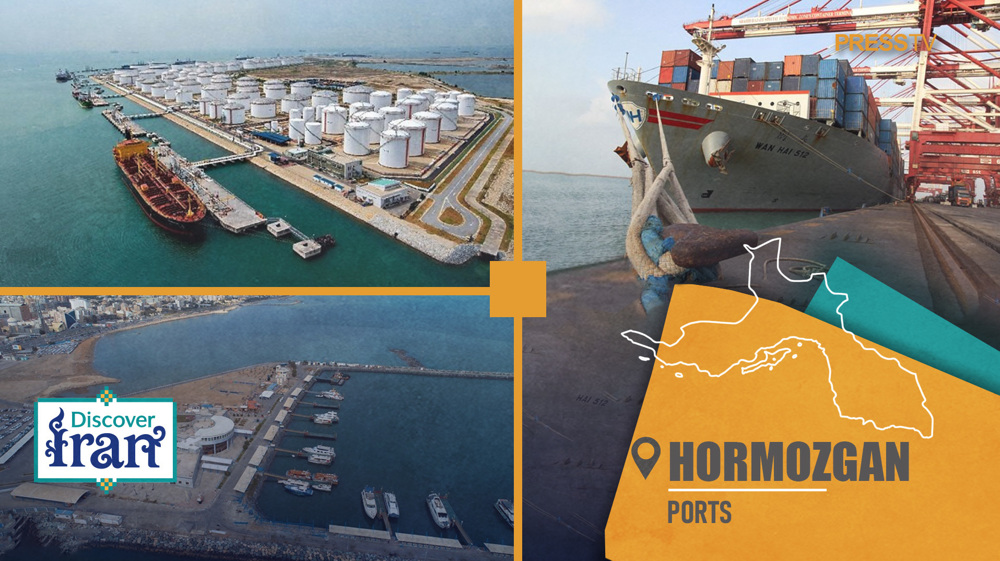
Discover Iran: Hormozgan’s strategic ports powering trade, commerce and connectivity

Iranian pharmaceutical industry flourishing
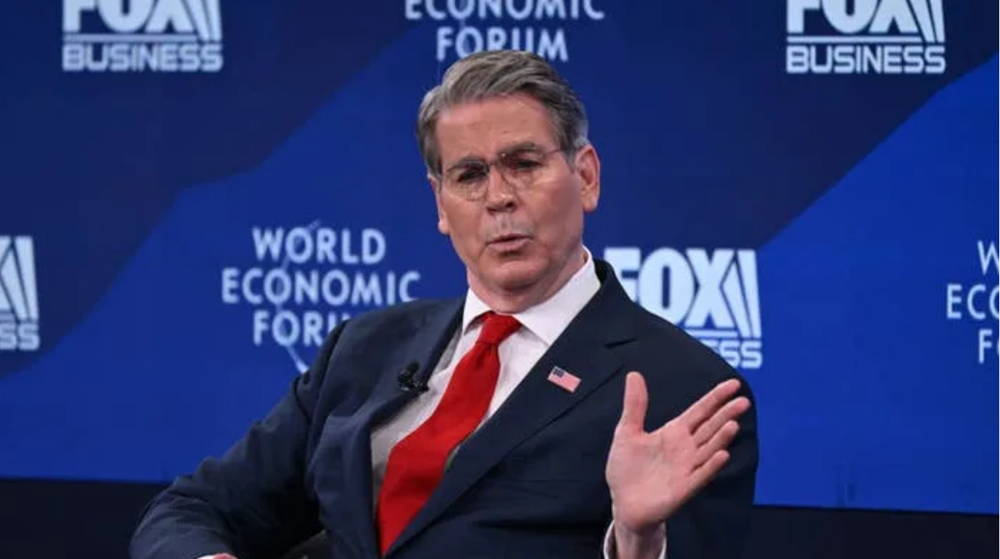
US Treasury Secretary boasts about harming Iran economy, fueling unrest


VIDEO | Israeli military destroys Gaza cemetery, scattering remains of over 700 graves
Iran ministry slams EU’s blacklisting of IRGC as 'Illegal, hypocritical'
Hamas blasts Western media for blindly defending false Israeli narrative
ElBaradei condemns US threats of military action against Iran
VIDEO | Red the only colour in Gaza
‘No two-hour war’: Iran vows immediate retaliation to any attack
VIDEO | US warmongering threatens stability
Pezeshkian: US must end provocations if it seeks genuine diplomacy


 PressTV NEWSLETTER
now
PressTV NEWSLETTER
now

 This makes it easy to access the Press TV website
