Anti-charter protesters kill eight police in Nepal

At least eight police officers have been killed in a series of violent clashes with angry demonstrators protesting against a proposed new national constitution in Nepal, security sources say.
Home Ministry spokesman Laxmi Prasad Dhakal said on Monday that causalities were caused after demonstrations against the constitution turned violent in Tikapur town, located about 420 kilometers west of the capital Kathmandu.
"So far I can confirm that eight members of our security forces have been killed, including two paramilitary personnel,” said Dhakal, adding, "An indefinite curfew has been imposed in the area from 4pm today."
The death toll is expected to rise as some of the 40 injured security personnel are said to be in critical condition.
Meanwhile, some reports indicate that at least three protesters were also killed during the violent clashes.
Home Minister Bam Dev Gautam blamed protesters for initiating the violence, saying thousands of protesters attacked the officers with spears, knives and stones. "All of a sudden protesters encircled the police and attacked them with knives, axes, sickles and spears."
Gautam added that demonstrators also set fire to one of the paramilitary officers. "Inspector Ram Bihari Tharu of the Armed Police Force was burnt alive," he said.
The clashes erupted after protesters from the indigenous Tharu community, who were demonstrating against the new constitution, defied curfew in the volatile region.
The new national constitution aims to restructure Nepal as a federal state made up of seven provinces and draw a line under a decade-long civil war that ended in 2006.
A series of protests have continued to rock parts of the country, signaling that the new charter is not likely to allay concerns of the country’s many marginalized groups.
In the past two weeks, four people have been shot dead after protesters clashed with the police. This is while local administrations have imposed overnight curfews in several districts.

In early June Nepal’s major rival political parties, spurred on by a devastating earthquake, reached a historic agreement to end years of deadlock on a new constitution for the country. Four parties – two ruling and two opposition – inked a historic deal, including a settlement on federalism, the main bone of contention among political parties.
Regional parties have long pushed for new provinces to be created along lines that could favor historically marginalized communities. Other parties saw the demand as divisive and threatening national unity.
However, experts say the agreement leaves the issue of provincial borders unresolved, an omission which could create future problems.
The protesters argue that the new internal borders will discriminate against historically marginalized communities including the Tharu ethnic minority. Tharu community members demand their own separate province.

Rights groups in Australia call on authorities to arrest Israeli president
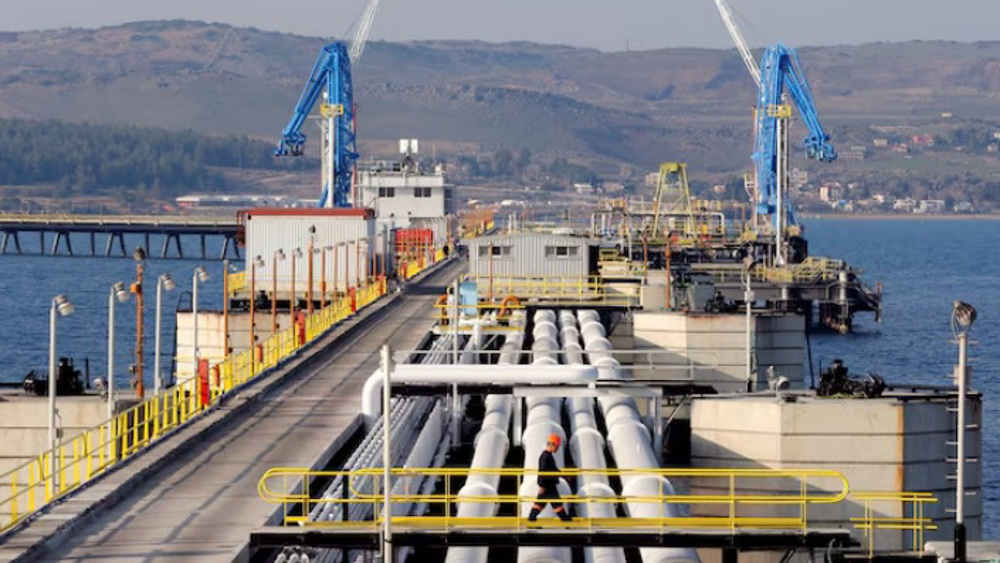
Israel’s Azerbaijani oil imports via Turkey surged in 2025: Report

100 writers pull out of Australia arts event after Palestinian author disinvited



Iran, US to hold nuclear talks in Istanbul: Report
Israeli strikes kill at least one, injure several people in south Lebanon
VIDEO | Imam Khomeini at Iran’s Neauphle-le-Château: Revolutionary influence in France
VIDEO | Press TV's news headlines
Israel holds 766 Palestinian bodies, nearly half since October 2023: Report
VIDEO | A new lease of life
Jordan says will not be ‘battleground or launchpad’ against Iran
Iran rules out enriched uranium transfer as part of nuclear deal


 PressTV NEWSLETTER
now
PressTV NEWSLETTER
now

 This makes it easy to access the Press TV website
