Oil prices fall in Asian market over China economic worries

Oil prices have continued to fall in Asian markets as dealers are worried about China's economic situation after Beijing took a surprise decision to devaluate its national currency, yuan.
According to an AFP report, the US benchmark West Texas Intermediate (WTI) for September delivery was sold for 9 cents lower at USD 42.99 a barrel on Wednesday, while Brent crude for September delivery also shed 26 cents to reach USD 48.92 per barrel in afternoon trade.
WTI had sank to its lowest close since March 2009 on Tuesday, while Brent also fell in London trade, after the central bank of China moved to devalue its national currency, yuan, by nearly 2 percent against the US dollar.
The People's Bank of China once again lowered the daily rate that determines the value of the Chinese currency against the US dollar on Wednesday by 1.62 percent, sending a new shockwave through financial markets.
"The Chinese yuan continues to weaken for the second day, which could suggest further weakening of oil prices," said Daniel Ang, an investment analyst at Phillip Futures in Singapore.
Many investors are wary that Beijing's move to devalue yuan is a sign of concerns over economic growth in the world's second-largest economy and number one energy consumer. Economic data published over the weekend showed that China is experiencing a decline in its trade sector.
Devaluation of yuan also strengthened the US dollar, which in turn increased the price of dollar-denominated commodities for international customers.
According to Ang, another factor that tampered with oil prices was an announcement by the Organization of the Petroleum Exporting Countries (OPEC) to the effect that the organization’s output rose by 100,700 barrels per day in July compared to 31.5 million barrels per day the previous month.
"An increase in OPEC production is certainly not ideal for the oversupplied market at this point in time," Ang added.
According to analysts, OPEC’s reluctance to cut its output despite falling demand for oil is seen by market activists as a sign that global oversupply is here to last.
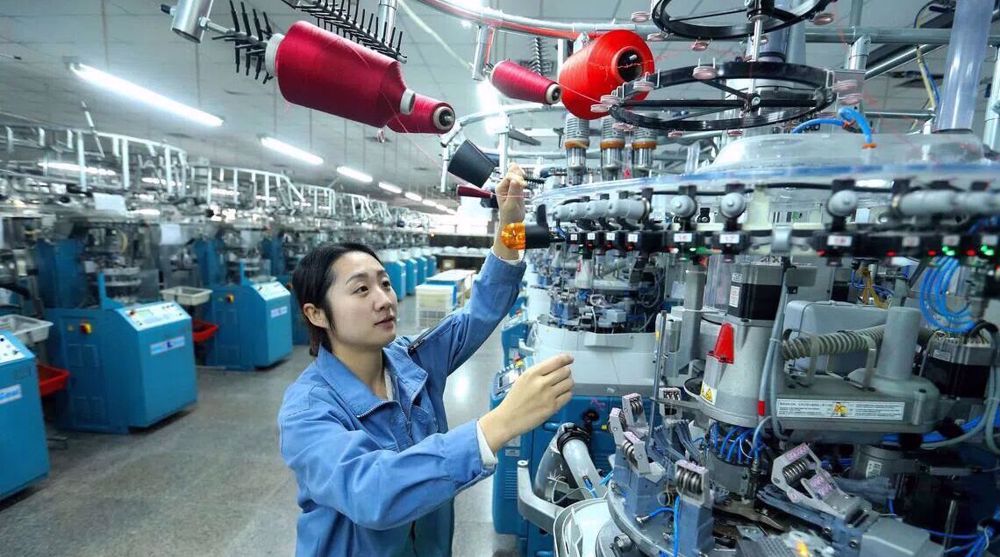
China's factory activity snaps record slump

Oil prices rise as Trump’s Venezuela blockade stokes supply uncertainty

'Migrants at largest US detention camp face foul water, rotten food'



VIDEO | Venezuela's interim president will continue same policies: Analyst
Iran’s support was pivotal in decisive victory over Daesh: Iraqi PM
US kidnapping of Maduro makes mockery of intl. law, sets dangerous precedent
Afghan border closure, fewer terror attacks in Pakistan
VIDEO | From trauma to triumph
VIDEO | Press TV's news headlines
VIDEO | Iranians mark Father’s Day coincided with Gen. Soleimani martyrdom anniv.
UK, France conduct joint airstrike near Syria’s Palmyra


 PressTV NEWSLETTER
now
PressTV NEWSLETTER
now

 This makes it easy to access the Press TV website
