Obama secretly expanded NSA spying in 2012: Documents

The US administration of President Barack Obama expanded warrantless surveillance of Americans’ Internet searches, according to new National Security Agency (NSA) documents released by whistleblower Edward Snowden.
The US Justice Department authorized the NSA in 2012 to search Americans’ international Internet traffic for evidence of malicious computer hacking, according to the New York Times and investigative news website ProPublica, which obtained the documents from Snowden.
Justice Department lawyers wrote two secret memos in mid-2012 permitting the NSA to watch Internet traffic flowing to suspicious addresses or containing malware, as well as monitor addresses and “cyber signatures” without a warrant.
The government can also gather significant volumes of Americans’ information, including private emails and trade secrets, through Internet surveillance because monitoring the data flowing to a hacker involves copying that information as the hacker steals it.
The effort is the latest known expansion of the NSA’s warrantless surveillance program, which allows the government to intercept Americans’ cross-border communications if the target is a foreigner abroad.
While Congress passed legislation this week limiting some of the NSA’s spying authority, it did not apply to the warrantless wiretapping program.

US President Barack Obama signed the USA Freedom Act into law on Tuesday, hours after the Senate gave its final approval for the legislation. The bill passed the US House of Representatives on May 13, 2015.
The new law will replace the Patriot Act, the sweeping surveillance legislation passed in the days immediately after the attacks of Sept. 11, 2001.
However, the legislation would continue other post-9/11 surveillance provisions, including the FBI's authority to gather business records in terrorism and espionage investigations and to more easily eavesdrop on suspects who regularly discard mobile phones to avoid surveillance.
The American Civil Liberties Union and other privacy advocates have warned that the bill does little to ensure privacy.
Snowden, who lives in Russia where he has been granted asylum, has said that US government surveillance methods far surpass those of an ‘Orwellian’ state, referring to George Orwell’s classic novel “1984,” which describes a society where personal privacy is continuously invaded by spy agencies.
MTM/AHT/GJH

UN rapporteur says Georgetown cut ties over exposing Israel’s genocide in Gaza

Epstein abuse survivors slam US Justice Department over redacted files
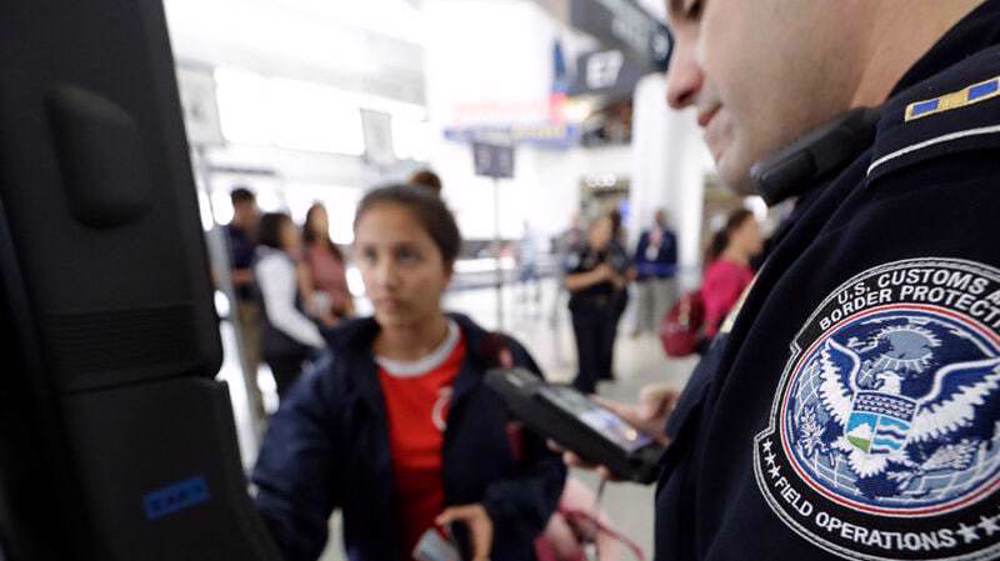
US set to demand five-years of social media data from all foreign visitors


Israeli court advances forced displacement of Palestinians in favor of Jewish settlers
UN Security Council members condemn Israel's recognition of Somaliland
Israeli high-tech faces talent flight in wake of Gaza genocide: Report
The Year That Was: Wars, genocide, protests, scandals – events that defined 2025
Iran, Oman foreign ministers stress confronting sources of unrest in region
VIDEO | Gaza named deadliest place for journalists in 2025
VIDEO | Policy paper sparks debate over US intentions in Tunisia
Khaleda Zia, Bangladesh’s first female prime minister, dies at 80


 PressTV NEWSLETTER
now
PressTV NEWSLETTER
now

 This makes it easy to access the Press TV website
