British political system and scandals

By Jane Calvary, Investigative Journalist
Sex scandals, expense scandals, vote rigging, cash for access scandals, drugs and tax evasion scandals are now turned to a constant theme of the news when it comes to British political system.
And now Britain is once again back to the spotlight as a country with deeply corrupt political system.
Two former British Government Secretaries who were acting as frontbenchers of the Labor and Tory parties are filmed offering their influence and position to benefit a private Hong Kong-based communication agency.
In a sting operation by the Daily Telegraph and Channel 4’s Dispatches, Sir Malcolm Rifkind and Jack Straw clearly express their readiness to use their influence in favor of a bogus foreign company in return for thousands of pounds. Mr. Rifkind has been the Conservative chairman of the Intelligence and Security Committee of Parliament. He has served for more than a decade in the Cabinets of Margaret Thatcher and John Major. Mr. Straw has been a Labor frontbencher of the British Labor party who has also held high ranking positions such as Justice Secretary, Home Secretary, Foreign Secretary and the Leader of the House of Commons.
In one piece of footage that is readily available on YouTube, Straw admits that he has used his influence to change EU rules on behalf of a commercial firm that paid him £60,000 a year. Mr. Straw also admits that he has used what he calls “charm and menace” to even persuade the former Ukrainian president to change the law in favor of the same company. Finally while describing his operation as “under the radar” straw offers a day of his work for a fee of £5,000 a day adding that he would “almost certainly take” an executive position with the firm.
In other footage, the Tory grandee Malcolm Rifkind states: “I am self-employed. So nobody pays me a salary, I have to earn my income, but when I am not doing something I can do what I like.” He claims that he could arrange what he calls “useful access” to every British ambassador in the world setting a £5,000 to £8,000 for half a day’s work.
Upon release of the clips, both heavyweight politicians defended their acts denying any wrongdoing. Both Labor and Tory parties suspended them as a clear sign that such event could not have come at a worse time. According to the latest news, the new cash for access scandal has soared negative social sentiments for the Labor and Tory party leaders. According to a social media monitoring firm, Talkwalker, the negative sentiments towards Cameron on social media has had risen by 25% to 65%. The positive views towards Cameron have also dropped from 9% to 7%. The situation for Miliband is even worse. Negative sentiments towards Miliband have risen from 34% to 78% while positive opinions have dropped from 15% to 1%.
Despite hue and cries in the British media, the ordinary citizens are not so surprised. The new scandal sounds familiar, and this is just one of several money-related scandals in the heart of the British parliament.
In 2010, the same undercover investigation led to an enormous embarrassment for the British establishment. The sting operation by Channel 4’s Dispatches revealed that many British MPs and Lords were ready to lobby in favor of private firms in exchange for large sums of money. The controversy had huge repercussions engulfing 4 former Labor Cabinet Ministers: Stephen Byers the former Secretary of State for Transport, Local Government and the Regions, Patricia Hewitt the former Secretary of State for Health, Geoff Hoon the former Secretary of State for Transport and former Secretary of Defense and Richard Caborn the former Minister For Sport. Despite the anger and distrust among the public, the then Labor Prime Minister Gordon Brown stood against all calls for a Whitehall investigation sparking the speculation of a systematic cover-up by the establishment.
Two years later, in May 2012 new revelations brought fresh embarrassment for Tories. Footage revealed that the then Tory co-treasurer Peter Cruddas offered intimate dinners with the Prime Minister David Cameron and Chancellor George Osborne for a £250,000 donation to the Conservative party. Despite the calls for an inquiry, the prime minister’s office announced that it won’t disclose any details of private meetings between David Cameron and donors calling any request for publication of the list of visitors unreasonable.
These three examples are just the tip of the iceberg. Scandals surrounding British politicians and the Royal Family are too many to mention. Scandals such as Prince Andrew’s sex scandal, las vegas Royal hangover, Sarah Ferguson’s affairs, the Iris Robinson scandal, Chief Secretary to the Treasury David Laws expense scandal, Liam Fox and Adam Werritty affairs, BSkyB scandal and Jeremy Hunt affairs, plebgate and resignation of Maria Miller over expense scandal, are just the beginning of the long list of scandals in British political atmosphere.
So far, the authorities have dealt with all these scandals in a same manner: if they were related to the Royal Family, they have had kept silence. If it was about the Parliament or other political institutions, they have followed the same route: first somebody who is in the public eyes is catched; then they are watched squirm and hide followed by political leaders and the government figures jumping the scene posing angry in front of ensuing cameras. They promise swift inquiry that would end in severe punishment then the scandal is swept under the carpet as nothing has happened.
End of the day the long chain of political scandals is more than just greedy MPs, nefarious Cabinet Ministers, corrupt Lords and piggish Royal Family members exploiting their positions. It raises and bold the fundamental questions about how Britain is governed.
JC/HSN

From Zionism to Daesh, the battles that defined Gen. Soleimani's illustrious legacy
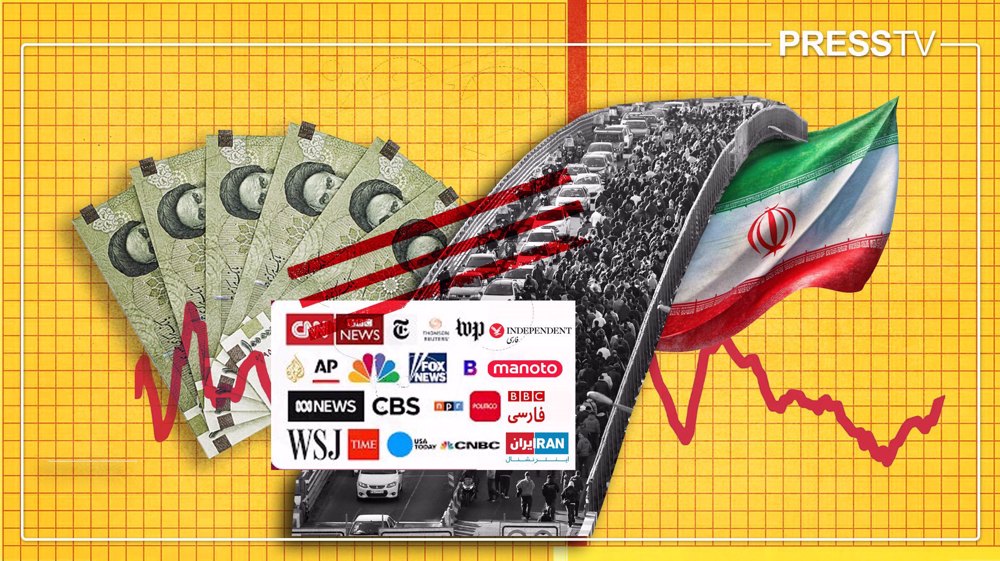
Tehran protests: How hostile external forces exploit economic discontent to foment chaos

Forged by fire: Iran’s military preparedness at an all-time high after 12-day war



VIDEO | Press TV's news headlines
Dozens killed, over 100 injured in fire at Swiss ski resort bar
VIDEO | Gen. Soleimani martyrdom anniv. inspires cultural tributes
VIDEO | Israel continues large-scale demolitions in Nur Shams camp
Russia delivers evidence to US of Ukrainian drone strike on Putin's residence
MSF slams Israeli actions, baseless allegations
Hamas slams Israel for pursuing 'Judaization' agenda in occupied West Bank
President: Iran will stand firm against threats, continue path of martyrs


 PressTV NEWSLETTER
now
PressTV NEWSLETTER
now

 This makes it easy to access the Press TV website
