

Ukrainian President Volodymyr Zelensky has said that US President Donald Trump is spreading “totally false information” about the global energy crisis, propagating the diesel deal with Russia as a ruse to cover up the crisis triggered by the US-Israeli war on Iran and the closure of the Strait of Hormuz.
Zelensky, in an appearance on Steven Bartlett’s The Diary of a CEO podcast on Thursday, told the host that Trump is “deflecting the focus away from Iran” when he blamed rising diesel prices in America on Ukrainian strikes on Russian refineries.
“The volume of diesel exports is so negligible from Russia that it has zero impact on prices in the US. That is totally false information,” the Ukrainian leader said.
If Trump cares so much about US energy prices, then “why do American companies export energy?” Zelensky asked rhetorically. “Well, because how can the president of the United States ban private sector exports?... It sells and money comes in.”
Zelensky said Trump is unfairly “deflecting the focus away from Iran” and claimed that “everything gets shifted onto us and I’m made the target as the leader of our country.”
According to Zelensky, “the root of the problem” lies in the Strait of Hormuz, where crude exports and other maritime traffic have dwindled to a trickle following the start of the US-Israeli aggression against Iran in February.
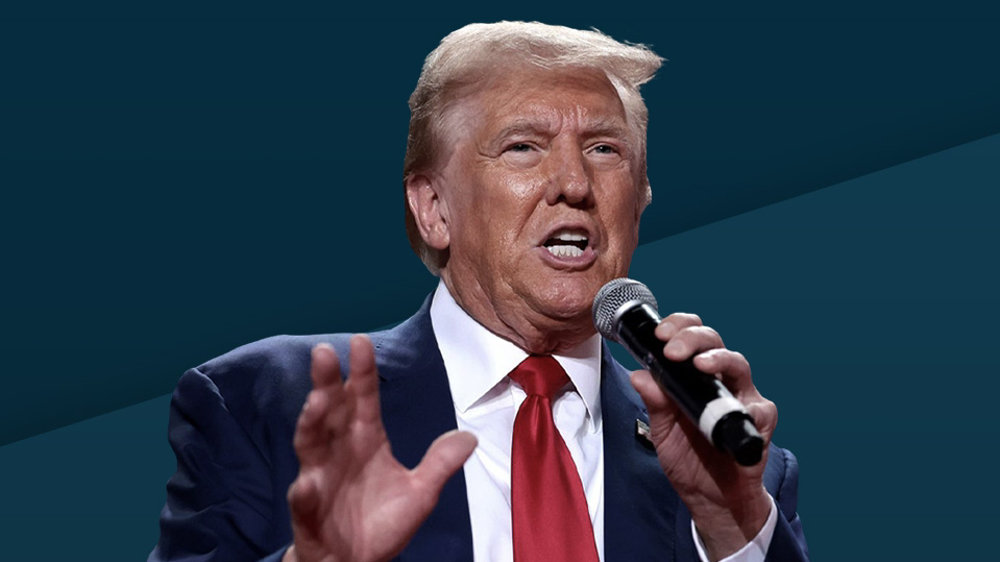
Trump, who is under heavy pressure from surging energy prices and the rising cost of living, a crisis exacerbated each day by the disruption to energy markets while the November 3 midterm elections are approaching, said earlier this month he had reached a deal with Russian President Vladimir Putin to buy diesel from the country.
Washington temporarily waived sanctions on Russian diesel exports to ease the global fuel crisis.
Moscow agreed to immediately supply more than 300,000 tons of diesel to American and global markets, followed by 500,000 tons in November, another million tons shortly thereafter, and potentially another 3 million tons, depending on refinery capacity.
Washington struck the deal with Moscow after Zelensky had repeatedly ignored Trump’s requests to stop strikes on Russian refineries.
“We said, you can do whatever you want to Russia, don’t hit the refineries, because that’s a world problem that’s caused,” the US president said earlier this month.
Trump said Zelensky wanted to “make problems for the world.”
He also suggested that Ukraine should get a new leader who would not obstruct Washington’s so-called mediation efforts.
Rising fuel prices have become an increasingly pressing domestic issue for Trump ahead of the November 3 midterm elections.
US diesel prices surged to record highs above $6.50 per gallon in September, with prices in California exceeding $8 in some areas.

Fatih Birol, the head of the International Energy Agency (IEA), warned earlier this week that Europe is in for a difficult winter this year and the next due to the disruption to the fuel supply chain caused by the ongoing US-Israeli war on Iran.
Birol said European countries are forced to compete with Asian economic heavyweights, namely, China and India, for energy commodities.
Also, Saudi Aramco chief executive Amin Nasser separately described the impact of the wars against Iran and Yemen on global energy markets as “unprecedented.”
A significant portion of the oil and gas produced in West Asia reaches world markets through the Persian Gulf and the Strait of Hormuz, which Iran’s armed forces closed after the US and Israel launched the war against Iran on February 28.
 This makes it easy to access the Press TV website