
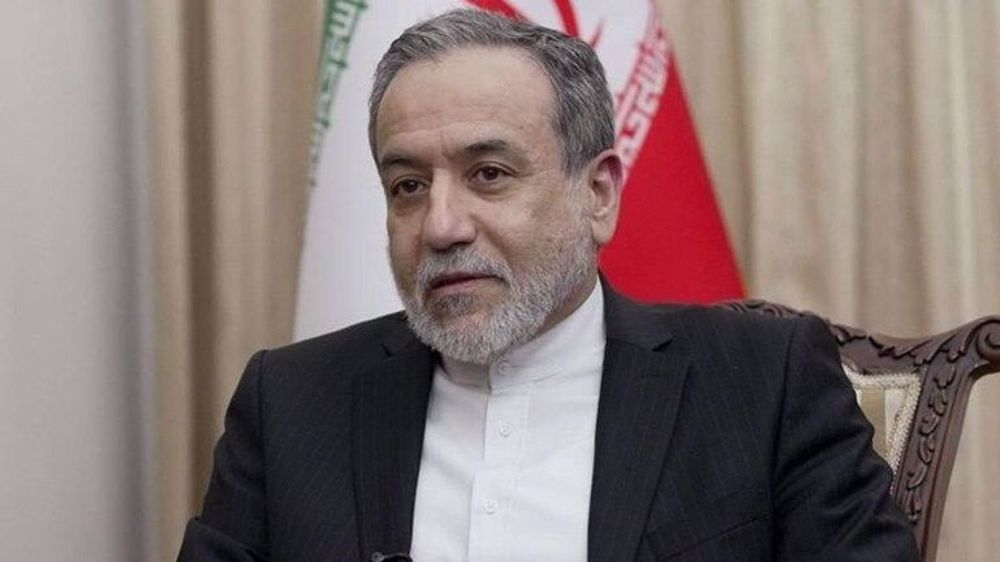
Foreign Minister Abbas Araghchi has described his consultations in Beijing as “successful,” commenting on the contents of his trip to the Chinese capital, where he met with his counterpart Wang Yi.
In a post on X following his meetings in Beijing on Wednesday, the top diplomat said Iran valued its long-standing strategic partnership with China and highlighted four principles outlined by Chinese President Xi Jinping as key to regional peace.
“Successful consultations in China with our partners. Iran values strategic partnership we have built over time,” Araghchi wrote.
No place for foreign forces in new regional order: Iran FMhttps://t.co/nx80badD9C
— Press TV 🔻 (@PressTV) September 16, 2026
“Today's decisions will decide future strategic balance in the region, with immeasurable knock-on effects,” he added, highlighting the momentous role played by various concerned parties’ respective attitudes towards regional affairs to the region’s future.
The Iranian foreign minister, meanwhile, highlighted the “four principles for peace outlined by President Xi” as “key” to realization of regional peace and stability.
Earlier this year, the Chinese head of state had outlined four principles for West Asia and Persian Gulf stability, namely peaceful coexistence, respect for national sovereignty, adherence to international law, and balancing development with security, while reaffirming China’s readiness to support dialogue and play a constructive role.
During the meeting with Wang, the countries’ top diplomats discussed the regional situation and bilateral relations.
Iran’s Foreign Minister Abbas Araghchi arrived in Beijing, China, and met with his Chinese counterpart.
— Press TV 🔻 (@PressTV) September 16, 2026
Follow: https://t.co/boCY50qfi9 pic.twitter.com/apY6EvizYD
The Iranian foreign minister said the regional situation had undergone fundamental changes following the unprovoked US-Israeli war against Iran earlier in the year, arguing that the emerging regional order should be based on cooperation among regional states without foreign military presence or interference.
“In the new regional order, which will be accompanied by dialogue and cooperation among regional states, there is no place for the presence or interference of foreign forces,” he stated.
Araghchi attributed the current tensions affecting the region to the US-Israeli aggression and noted that Iran’s resistance had thwarted the aggressors’ objectives.
Referring to repeated US violations of a Pakistan-mediated memorandum of understanding that was reached between Tehran and Washington in June, and was intended to end the war, he reaffirmed Tehran’s stated objective of restoring regional calm.
Wang, for his part, described the war as “illegal” and stressed the need for peace and stability in West Asia and resolution of issues through dialogue and diplomacy. He also expressed Beijing’s readiness to help de-escalate tensions and support dialogue.
 This makes it easy to access the Press TV website