
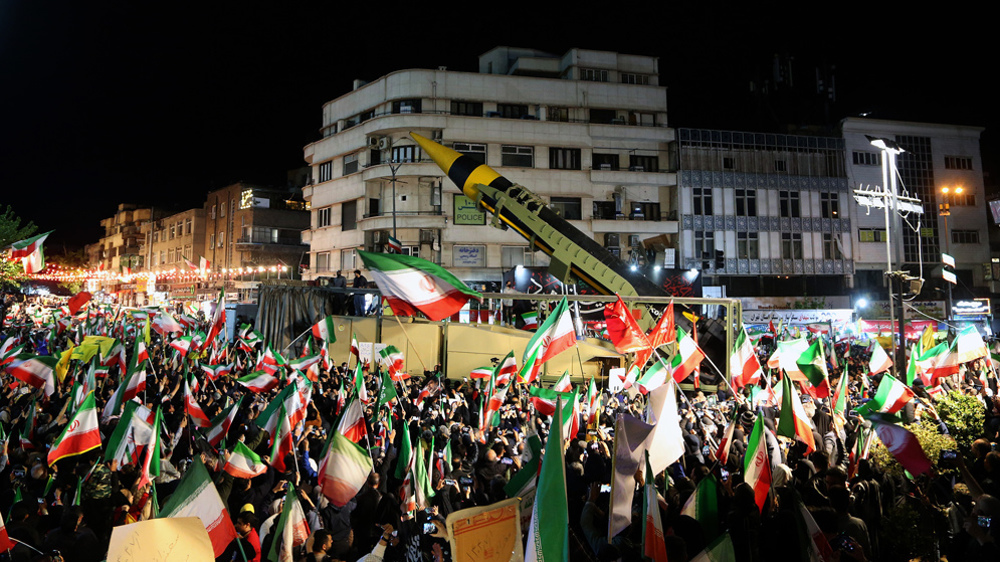
The commander of the Islamic Revolution Guards Corps (IRGC) Navy has praised the Iranian public for 200 consecutive nights of nationwide demonstrations in support of the armed forces.
In a message marking the 200th night of the demonstrations on Tuesday, Rear Admiral Ali Ozamaei thanked Iranians for their “heroic” presence.
Ozamaei said the ongoing gatherings prove national unity and resilience.
The Iranian commander highlighted the steadfast support of the Iranian nation as the driving factor of the sacrifice and determination of the armed forces on the southern front and at sea.
The Persian Gulf and the Strait of Hormuz have been free of the presence of US forces and Iran’s other enemies over the past 200 days, Ozamaei said.
Referring to the strategic waterway, he said Iranian forces would not allow the oppressors to return.
The IRGC Navy commander called on the public to maintain public presence to further strengthen national unity.
Earlier, Iran’s Judiciary Chief Gholamhossein Mohseni-Ejei also praised the demonstrations, describing the gatherings as a major display of public support for Iran’s armed forces.
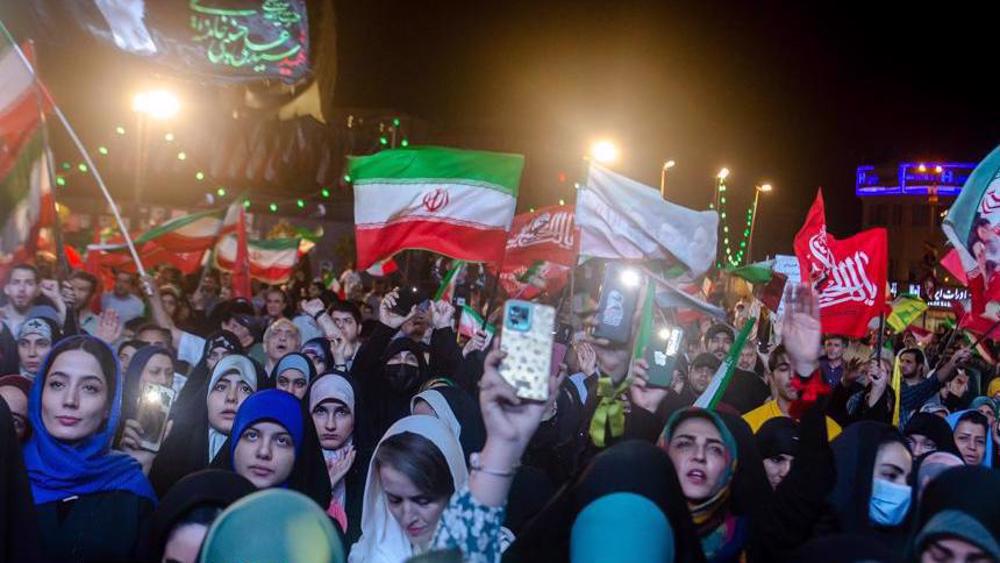
The nightly demonstrations first began in the immediate aftermath of February 28, when the United States and Israel launched a full-scale war of aggression against Iran.
What began as spontaneous outpourings of grief and outrage following the bombardment of Iranian cities and civilian infrastructure quickly crystallized into a synchronized, nationwide movement.
By early March, citizens across Iran’s major metropolitan centers and rural provinces alike had established a routine of gathering in public squares every night after sunset.
These nightly vigils serve a dual purpose on the Iranian home front.
On one level, they act as a massive morale-boosting mechanism for the armed forces, with crowds frequently directing their chants and solidarity toward the frontline soldiers of the Army and the IRGC.
On another level, they function as a rejection of Western psychological warfare.
Participants routinely light candles for the martyrs, wave national flags, and chant anti-oppression slogans, signaling an unwavering refusal to capitulate to foreign coercion or economic strangulation.
 This makes it easy to access the Press TV website