Iran proposes ‘mutual security, non-aggression pact’ among Muslim states

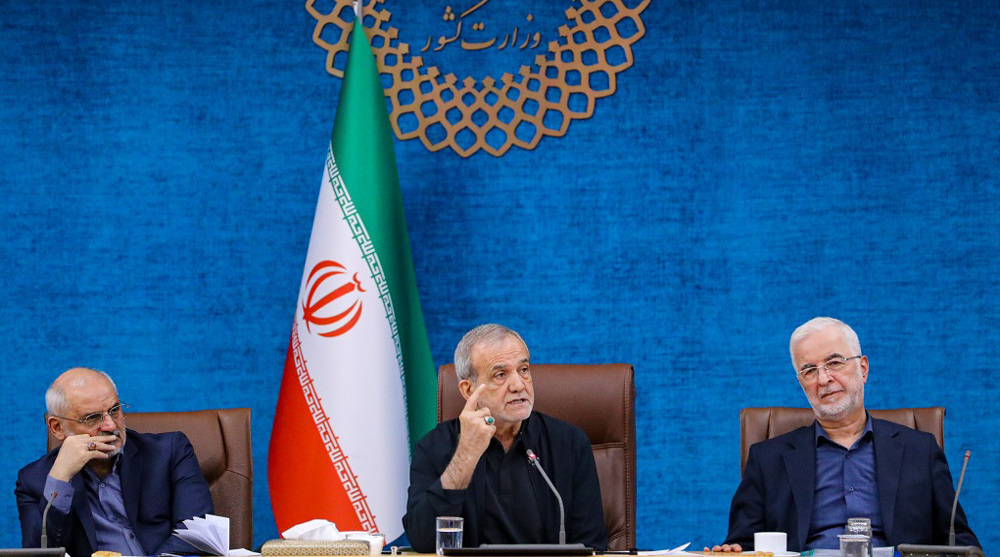
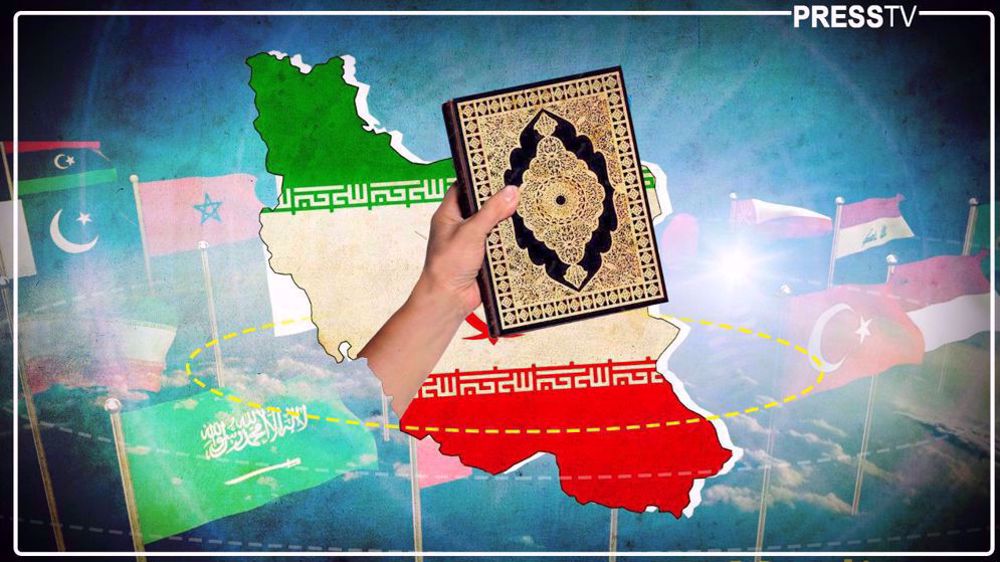
Iranian President Masoud Pezeshkian has proposed a “mutual security and non-aggression pact” among Muslim countries to safeguard regional security amid US-Israeli acts of aggression.
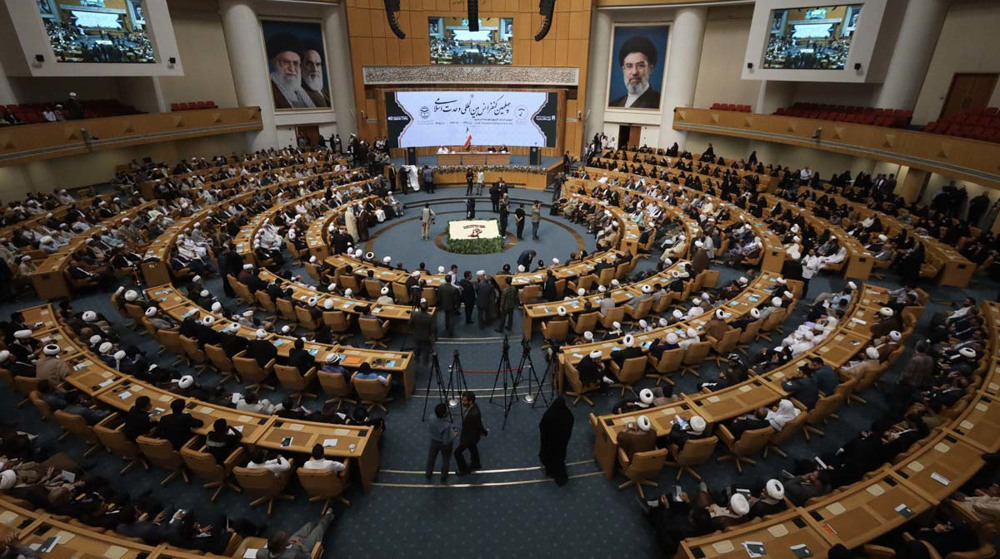
Pezeshkian made the remarks on Thursday in an address to the 40th International Conference on Islamic Unity that kicked off in Tehran, where he outlined three proposals for strengthening unity among Islamic nations.
“The first [proposal] is a mutual security and non-aggression pact among Muslim countries, under which they commit to respecting one another’s territorial integrity,” he said.
“They should not allow their territory, airspace, or facilities to be used to attack another Muslim country. They should not support efforts to divide or destabilize one another, nor define their own security at the cost of others' security. Instead, they should work together to manage regional security.”
The Iranian chief executive also clarified that his offer does not mean the formation of a military alliance or the adoption of the same foreign policy among Islamic states.
He further said that his second proposal is to establish a permanent mechanism for mediation and conflict prevention in the Muslim world.
The Organization of Islamic Cooperation (OIC), he added, should be able to intervene before disputes escalate into war, rather than simply issue statements after thousands of people are killed.
Meanwhile, Pezeshkian laid out his third proposal that includes the "transformation of the Muslim world from a collection of separate markets into a network of genuine cooperation."
In such an environment, Muslim scientists can work together on joint projects in different fields and investment from Islamic countries is directed toward development and technology within the Muslim world itself, he emphasized.
Additionally, the president hailed Iran’s national unity during the difficult time of the US-Israeli war of aggression as a “tremendous asset,” saying Iranians came to defend their country when they saw its existence and territorial integrity under threat.
Iran was attacked at a time when it had resumed negotiations with the US, he said, stressing. “We did not start the war, but we stood firmly against this aggression.”
“Defending Iran does not mean being hostile toward Muslim and neighboring nations. No Muslim country should allow its territory to be used as a platform for aggression against another Muslim country, and no Muslim country should seek its own security at the expense of its neighbor’s security,” he went on to say.
The United States and Israel launched their illegal war of aggression against Iran on February 28 by assassinating Leader of the Islamic Revolution Ayatollah Seyyed Ali Khamenei, along with senior military commanders.
Forty days later, on April 8, the enemies were forced to accept a ceasefire amid Iran’s resistance, successful retaliatory operations, and a powerful grip on the Strait of Hormuz.
In July, the US conducted waves of deadly air raids on Iran and imposed a naval blockade of the country in violation of the Islamabad Memorandum of Understanding (MoU) with the Islamic Republic, signed on June 17, to end the war.
In response, the Iranian armed forces launched devastating strikes against strategic American targets across West Asia and declared the Strait of Hormuz closed to all traffic.
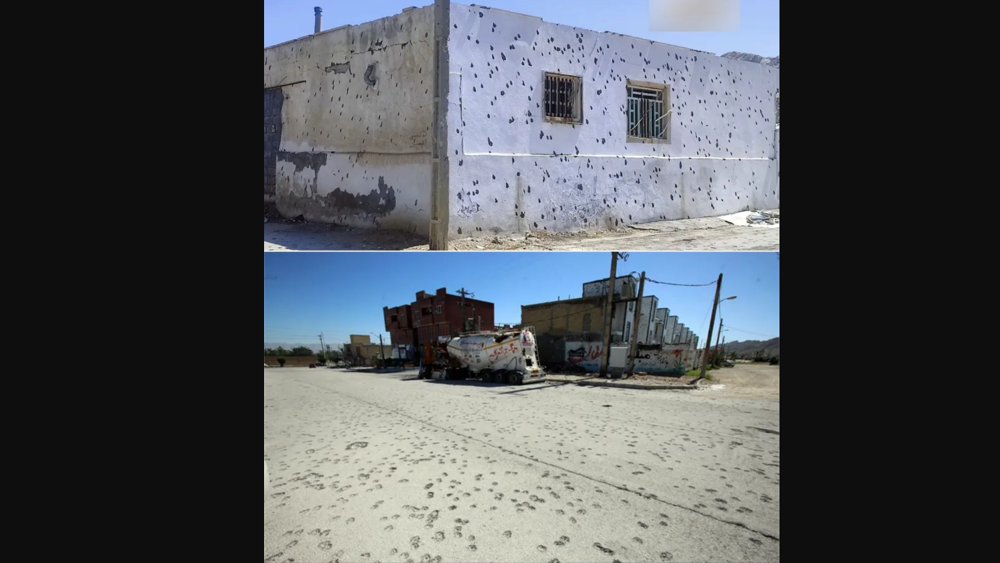
Iran: US cannot evade responsibility for war crimes by leaving UN rights council
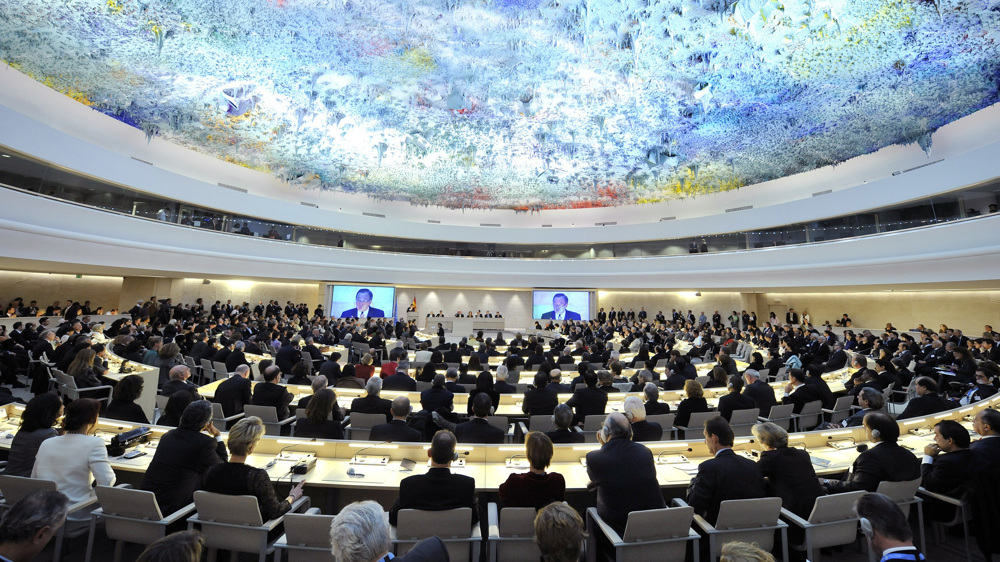
US leaves UN Human Rights Council after probe finds possible American war crimes in Iran
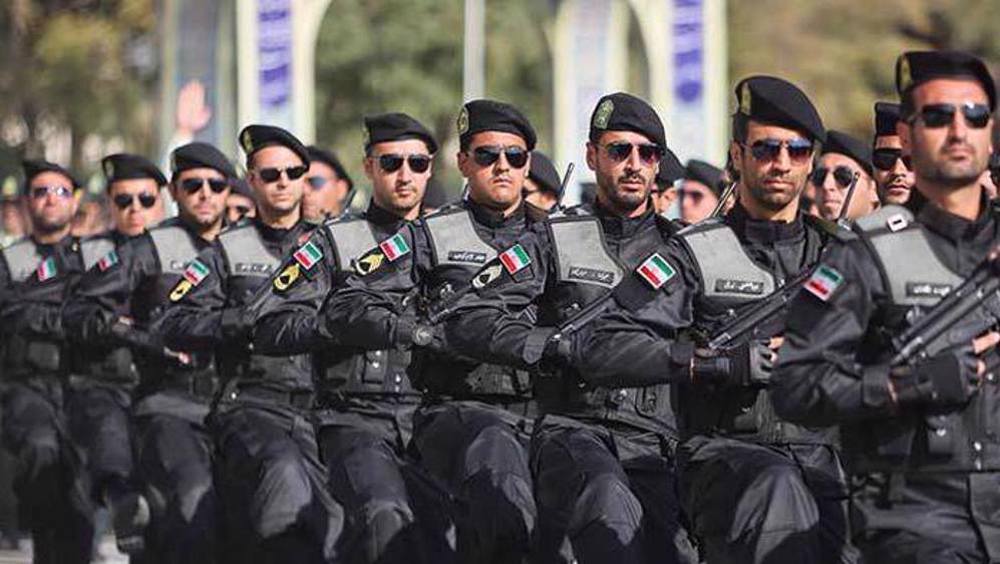
IRGC intelligence forces eliminate two terrorists in southeast Iran


Yemenis hold rally in Sa'ada in support of armed forces after lightning advances
Dozens killed in mosque blast, militant clashes in Pakistan’s Khyber Pakhtunkhwa
Iran: US cannot evade responsibility for war crimes by leaving UN rights council
Saudi crown prince seeks dialogue with Ansarullah after Yemeni blows: Report
IRGC intelligence forces eliminate two terrorists in southeast Iran
South Korea says will not send troops to join terrorist US war on Iran
Yemen's control of Bab al-Mandab 'deepens crisis' in Israel
Iran calls for ‘zero-tolerance’ policy on attacks against nuclear facilities at IAEA




 PressTV NEWSLETTER now
  This makes it easy to access the Press TV website