

Iran has condemned the US-Israeli aggression at a BRICS tourism meeting, saying over 4,000 people were martyred and 149 cultural sites damaged, including five UNESCO sites.
Seyyed Reza Salehi-Amiri, Iran’s minister of Cultural Heritage, Tourism and Handicrafts, made the remarks Friday while addressing the BRICS Tourism Ministers’ Meeting in Jaipur, where member states are discussing ways to strengthen tourism cooperation under India’s 2026 chairship.
The meeting is being held on August 21-22 following a tourism working-group session in Jaipur.
Salehi-Amiri condemned the “devastating aggression” against Iran, saying the war has inflicted profound suffering on the Iranian people.
He said more than 4,000 people have been martyred, including 168 children at the Shajareh Tayyebeh School in Minab, as well as civilians and prominent figures from Iran’s scientific, intellectual and cultural communities.
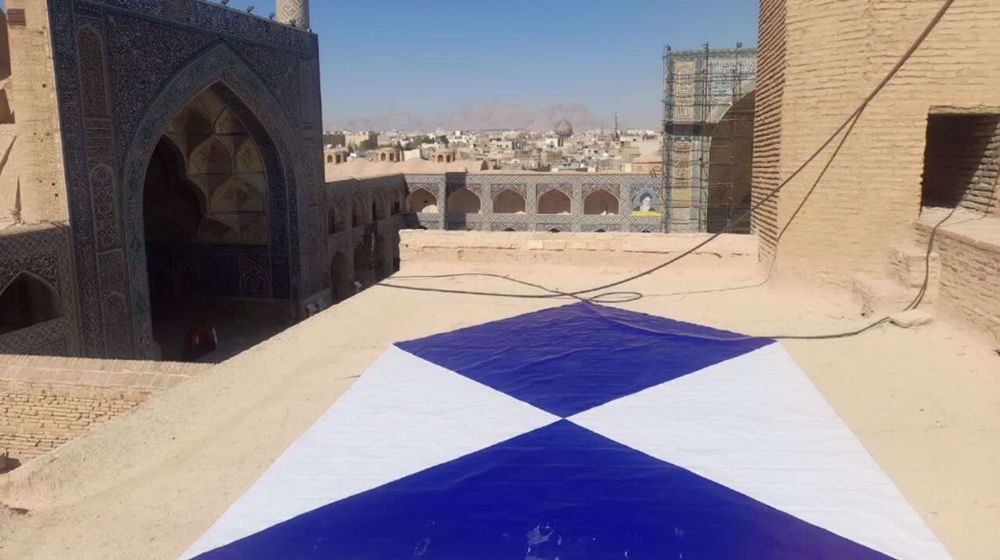
The minister said the attacks have also seriously damaged 149 historical and cultural sites, including five sites inscribed on the UNESCO World Heritage List, raising major concerns over the protection of Iran’s cultural heritage.
“This bitter experience,” Salehi-Amiri said, has drawn greater attention to the importance of a “people-centered approach to the common future of humanity”.
Protecting human life, preserving human dignity, safeguarding communities and protecting shared cultural heritage should be placed at the center of international cooperation, he said.
His remarks came as BRICS tourism officials focused on resilience, innovation, cooperation and sustainability, priorities established by India during its 2026 chairship.
India’s tourism agenda also includes sustainable and responsible tourism, tourism skills, capacity building, artificial intelligence and stronger exchanges and travel facilitation among member states.
For Iran, however, Salehi-Amiri stressed that the concept of resilience must extend beyond the ability of tourism economies to survive crises.
“Resilience should not only mean the ability of a tourism destination to overcome a crisis,” he said.
“True resilience means the ability of people, communities and cultures to preserve their identity, rebuild their livelihoods and lives, and recover their strength and dignity.”
He stressed that the future of tourism depends on placing people and communities at its center.
“Today’s world needs resilient communities more than resilient economies,” Salehi-Amiri said, adding that the world needs cooperation rather than confrontation, dialogue rather than division, and cultural understanding rather than hostility.
The Iranian minister then put forward a series of proposals aimed at giving BRICS tourism cooperation a more practical and people-centered character.
Iran’s most concrete proposal was the establishment of a BRICS fund to support tourism projects, which Salehi-Amiri said could help finance tourism infrastructure across member states.
He proposed that the fund’s implementation mechanisms be developed under the framework of the New Development Bank, creating a channel for financing and implementing joint tourism projects among BRICS countries.
Salehi-Amiri also called for closer coordination between government policies and private-sector capabilities, saying BRICS has made progress in expanding tourism links among governments but should now strengthen mechanisms that bring government support and private investment together.
He said Iran is ready to present mechanisms for putting such cooperation into practice.
Another major proposal centered on the Silk Road and Spice Route, historic commercial and civilizational networks that once connected peoples across Asia and beyond.
Salehi-Amiri said BRICS could use these routes to strengthen “people-to-people” exchanges among member states.
“These historic routes are not only part of the shared civilizational heritage of nations,” he said, but could also become platforms for tourism development, cultural exchange, greater mutual understanding and stronger regional and international cooperation.
 This makes it easy to access the Press TV website