
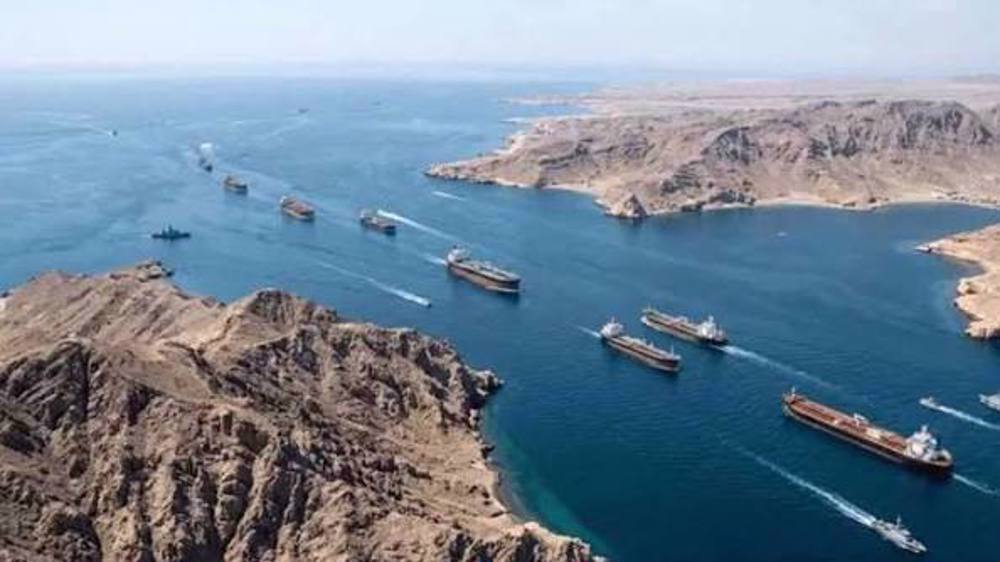
The head of Iran’s Basij Organization says the Strait of Hormuz remains under the “management and control” of the Islamic Republic, emphasizing that US efforts to create a new confrontation in the strategic waterway have once again ended in failure.
Hossein Taeb made the remarks during a meeting with Ayatollah Ahmad Khatami, a member of the Assembly of Experts and Tehran’s interim Friday prayer leader, in the city of Qom on Thursday.
"The Americans sought to disrupt the rule of the Islamic Revolution’s popularity in the region with a new war in the Strait of Hormuz, but once again they were defeated by an Iran that they claimed had no navy or air force," Taeb said.
He added that the United States and its allies launched “another war” in the Strait of Hormuz in an effort to disrupt existing regional rules, but failed to achieve their objectives.
“By God’s grace, the Americans who claim that Iran has neither an air force nor a navy were once again defeated,” he emphasized.
“Today, the Strait of Hormuz is under the management and control of the Islamic Republic, and our country continues on its path in complete security,” he said.
Taeb’s comments come amid continued regional tensions and ongoing discussions surrounding security arrangements in and around the Strait of Hormuz, one of the world’s most strategically important maritime routes.
Iran and the US signed a memorandum of understanding in June to end the cycle arising from the latest bout of unprovoked American-Israeli aggression against the Islamic Republic, which had begun on February 28.
Under the understanding, transits in the strait had to be arranged by Iran as Tehran agreed to allow fee-free maritime transit through the Strait of Hormuz for a period of 60 days.
In compliance with the MoU, Tehran devised a special maritime route for vessels to cross the chokepoint, warning vessels against using illegal routes.
However, the US attempted to undermine Iran’s sovereignty by establishing an unsafe corridor near the Omani shores.
The unlawful US measure prompted Iran’s firm response to re-impose restrictions on the Strait of Hormuz. Tehran says any movement in the strategic chokepoint must be conducted under Iranian arrangements, as per the understanding.
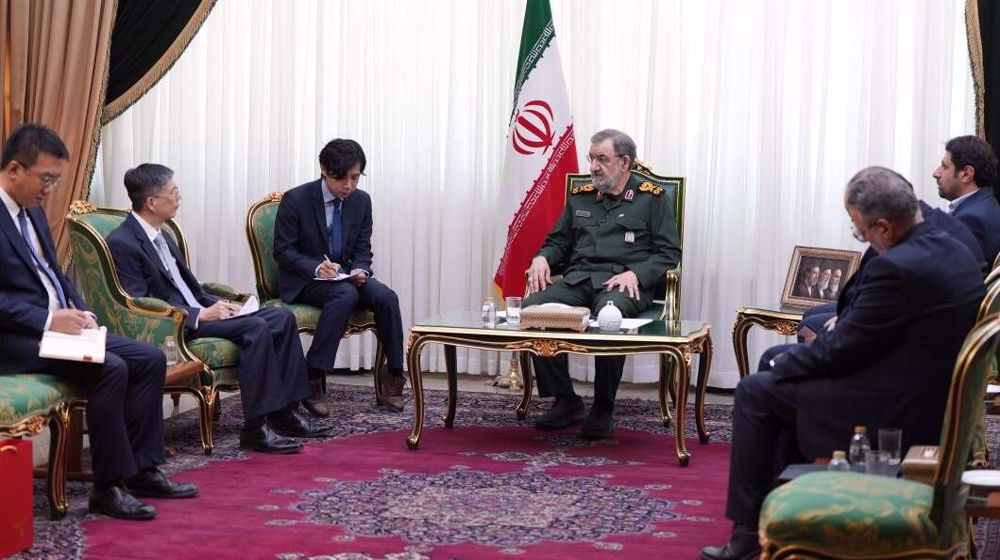
In a meeting with Chinese Ambassador to Tehran Zong Piyu on Tuesday, Mohsen Rezaei, the newly appointed head of the Supreme National Security Council, said the full reopening of the Strait of Hormuz in the Persian Gulf, where Iran has imposed restrictions on transit since early March because of the US-Israeli aggression against the country, will only happen when the United States accepts Iran’s conditions.
World witnessed the martyred Leader's popularity
Elsewhere in his remarks, Taeb said the large turnout of the Iraqi people in the funeral procession of the martyred Leader of the Islamic Revolution Ayatollah Seyyed Ali Khamenei in Iraq displayed Iran’s regional power.
He added that the Americans witnessed the power of the Islamic Revolution during these funeral ceremonies, noting that the Iraqis themselves were surprised by the scale of participation, acknowledging that they had not expected such a large turnout.
“The enemies realized that the popularity of a leader among his own people and the peoples of the region cannot be measured through their calculations and this popularity has been well displayed to the world,” he asserted.
Ayatollah Khamenei was assassinated by the US and Israeli militaries at his residence in Tehran on February 28, when the two regimes launched a bloody war of aggression against Iran that also saw the assassination of several top military commanders.
According to estimates, some 40 million people participated in the multi-city, week-long funeral ceremonies for the martyred Leader in Tehran, Qom, Najaf, Karbala, and Mashhad in early July.
 This makes it easy to access the Press TV website