
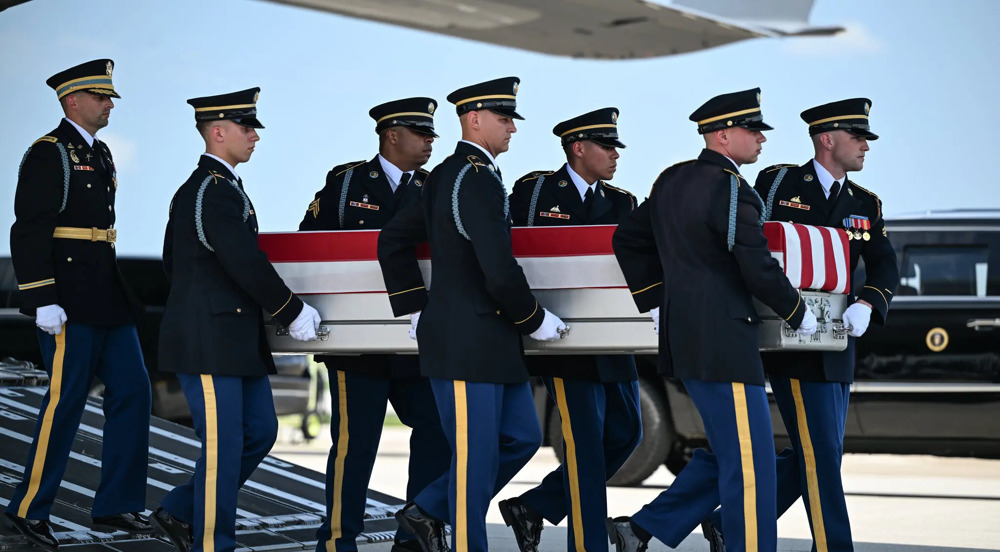
Hundreds of US troops have suffered traumatic brain injuries (TBI) in Iranian missile and drone strikes since Washington launched its war on Iran, highlighting the mounting physical cost of the US aggression and the potentially lasting consequences for American forces.
Nearly 700 US troops have been wounded in Iranian missile and drone attacks on US bases since Washington’s aggression against Iran escalated, according to US military officials. Most were diagnosed with traumatic brain injuries and returned to duty after treatment, the Associated Press reported.
The Pentagon has described most of the injuries sustained over a two-week period as “minor concussions.” But medical experts warn that an apparently mild concussion can develop into persistent neurological problems, including headaches, dizziness, memory loss, difficulty concentrating and chronic fatigue.
Doctors say there is currently no reliable way to determine immediately which blast injuries will result in lasting complications. They are also continuing to study how powerful explosions can damage the brain even without a direct blow to the head.
The widespread use of Iranian missiles and drones has heightened concern within the US military, as explosions can occur in close proximity to American troops, increasing the risk of blast-related brain injuries.
The scale of the injuries has revived concerns that traumatic brain injury could once again become a major legacy of a US war, as it did during the wars in Iraq and Afghanistan.
More than 500,000 US soldiers were diagnosed with TBIs between 2000 and 2025, according to US military data.
The consequences can persist for years. Former Marine Joe Shearer told the AP that two explosions he experienced during his 2005 deployment to Iraq were only recently diagnosed as traumatic brain injuries. He continues to suffer from migraines, dizziness, vertigo, light sensitivity and memory loss.
The latest injuries have also prompted scrutiny of the treatment available to US troops. Democratic lawmakers are seeking an investigation into medical care provided to service members wounded in an Iranian drone strike in Kuwait that killed six American soldiers earlier in the war.
Democratic Senator Tammy Baldwin said some injured US troops reported waiting weeks for screening or specialized treatment for traumatic brain injuries.
The injuries underscore the growing cost of Washington’s war on Iran, with Iranian missile and drone strikes inflicting damage on US forces that could extend well beyond the battlefield and persist long after the war ends.

Iranian retaliatory attacks have killed several US personnel and damaged at least 20 US military sites since the start of the US-Israeli aggression against the Islamic Republic.
Fresh reports indicate that the US Army has burned through a significant portion of its global stockpile of highly accurate long-range missiles during its five-month war of aggression against Iran.
The depletion of key munitions has reportedly fueled growing frustration within the Trump administration, with US President Donald Trump confronting Secretary of War Pete Hegseth over shortages of critical weapons and the apparent strain on Washington’s military capabilities.
According to a report published by The Washington Post on Wednesday, Trump confronted Hegseth at Camp David last Friday, demanding an explanation for why he had allegedly been given an “inaccurate picture” of US military capabilities.
 This makes it easy to access the Press TV website