
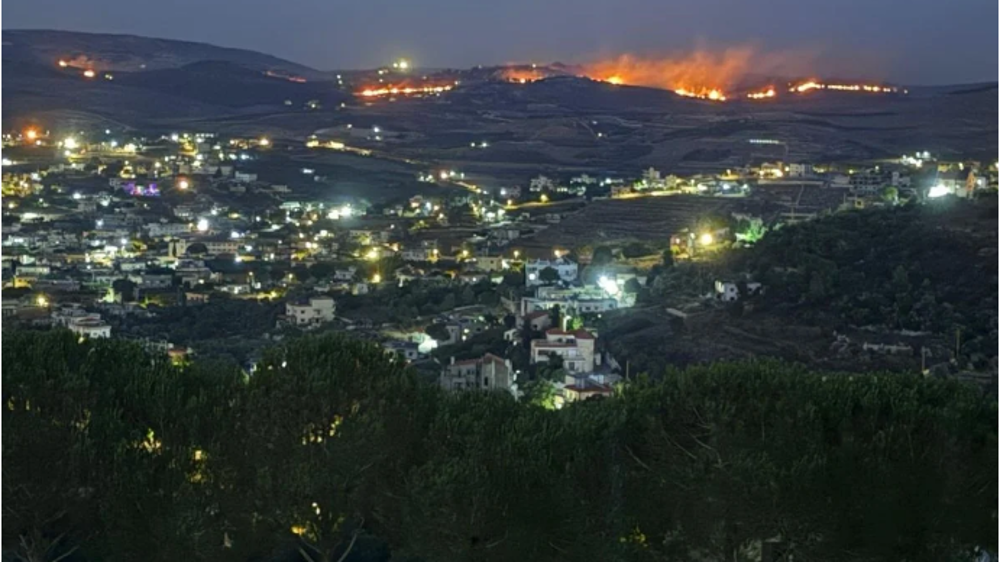
Israeli occupation forces have burned more than 120 hectares of centuries-old olive groves and fruit orchards in southern Lebanon, local officials say, as Israeli military operations continue despite ongoing US-mediated talks between Beirut and Tel Aviv.
According to the Lebanese daily L'Orient-Le Jour, Israeli troops set fire to more than 120 hectares (1,200 dunams) of olive groves and fruit orchards in the border town of Yaroun in the Bint Jbeil district, with the blaze burning for more than 36 hours.
Yaroun municipality chairman Hafez Ghacham told the newspaper that residents could do nothing but watch the fire consume generations-old olive trees as Israeli troops prevented access to the affected areas.
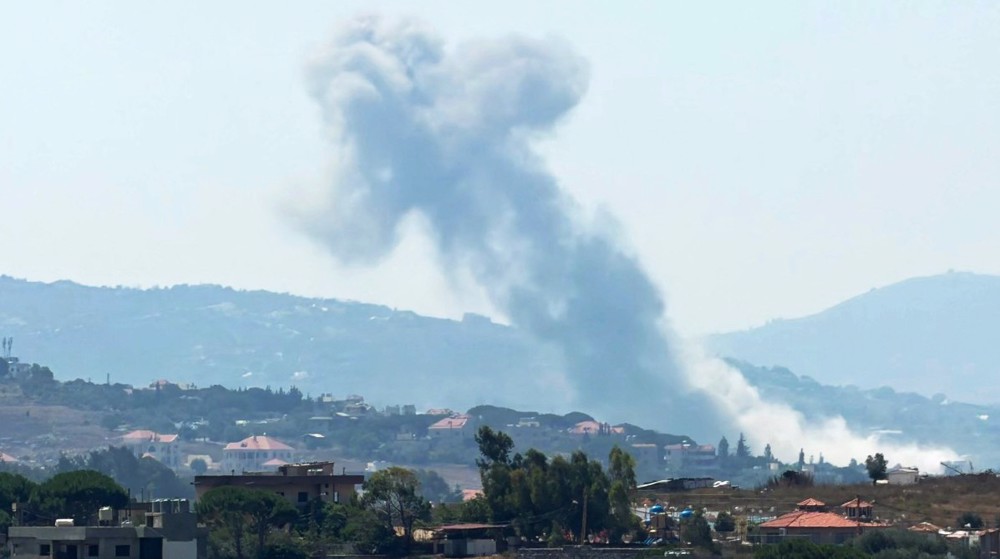
"My heart broke at the sight. Together with several residents, we watched the fields burn until we were in tears," Ghacham said. "Houses can be rebuilt, but the old olive trees will take decades to return to how they were before."
Neither residents nor firefighting teams were able to reach the affected areas due to the presence of Israeli troops, allowing the fire to spread unchecked, he added.
Ghacham described the destruction as an assault on Yaroun's history, identity, and means of livelihood, noting that the olive groves had been cultivated by generations of local families.
He estimated the destroyed land could have produced thousands of cans of olive oil, with each dunam typically yielding around six cans valued at approximately $150.
Ghacham also stressed that the destruction affected the entire community regardless of religion.
"The flames made no distinction between the olive groves of Christians and those of Muslims," he said, adding that the devastation concerned "the whole of the South: its land, its people, its culture, its dignity and its history."
The municipality said it plans to submit documentation of the destruction to the United Nations, adding that Israeli forces targeted not only residential areas but also the environment, agricultural land, and cultural heritage in southern Lebanon.
The destruction in Yaroun occurred just days before the seventh round of US-mediated talks between Lebanon's pro-Western government and Israel.
Speaking on Monday, Hezbollah Secretary General Sheikh Naim Qassem criticized the negotiations, saying previous rounds had yielded only "disgrace, humiliation, disappointment, and successive concessions" for Lebanon while benefiting Israel.
He also said that continued negotiations under military pressure were incompatible with safeguarding Lebanon's sovereignty.

On June 26, a US-mediated framework agreement was signed which calls for the phased withdrawal of Israeli occupation forces from southern Lebanon alongside the deployment of the Lebanese Army.
Since the agreement was signed, however, Israel has continued military offensives across southern Lebanon, carrying out airstrikes, demolitions and the burning of homes in border towns.
In a recent statement, the Lebanese Army said the systematic destruction of homes, bulldozing operations, bombardment and gunfire across several areas have obstructed its full deployment under the agreement and prevented residents from returning to their villages.
Israel's military is deliberately destroying residential areas and civilian infrastructure in southern Lebanon in an effort to render parts of the region uninhabitable.
According to Lebanese health authorities, the regime's attacks on the country have killed at least 4,333 people and wounded 12,236 others since early March.
During the current offensive, Israeli forces have advanced more than 10 kilometers (6.2 miles) into Lebanese territory.
 This makes it easy to access the Press TV website