Iran hints at huge pending pressure on enemies after Yemen threatens to close Bab el-Mandeb Strait
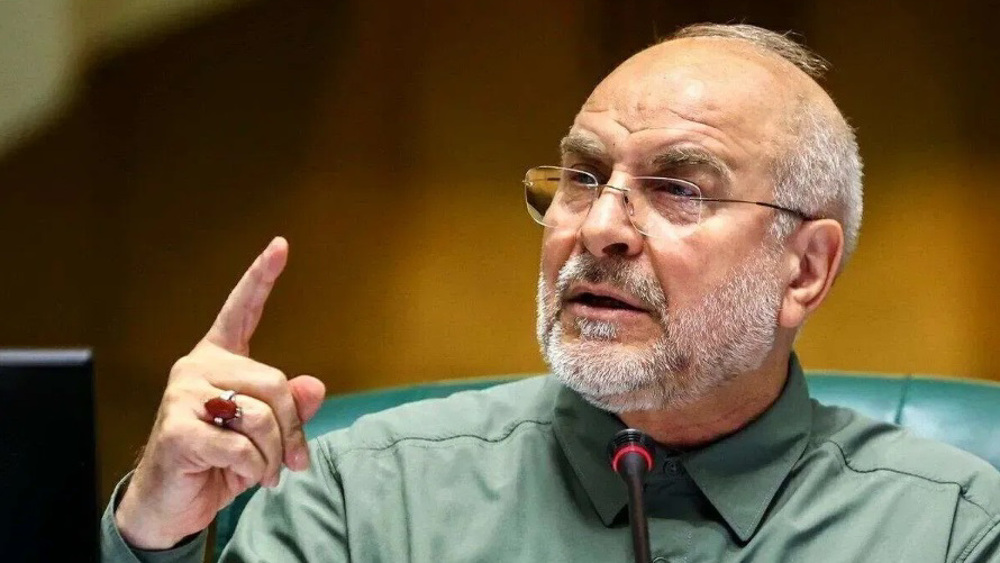
As Iran’s closure of Hormuz Strait to enemy vessels has already put intense pressure on adversaries, the Islamic Republic’s top legislator hints at the prospect of additional momentous pressure with potential closure of Bab el-Mandeb Strait, another vital chokehold.
In a post on X on Friday, Mohammad-Baqer Qalibaf, speaker of Majlis (Iran's Parliament), asked, "What share of global oil, LNG, wheat, rice, and fertilizer shipments transits the Bab-el-Mandeb Strait?"
Bab el-Mandeb joins Hormuz as pillars of global economic powerhttps://t.co/5J0r3yhpc9
— Press TV 🔻 (@PressTV) March 31, 2026
"Which countries and companies account for the highest transit volumes through the strait?" the post went on.
On February 28, the United States and the Israeli regime began their latest bout of unprovoked aggression targeting Iran. The Islamic Republic has responded by staging Operation True Promise 4, retaliatory strikes that have so far seen the country's Armed Forces unleash at least 93 waves of determined reprisal against strategic and sensitive American and Israeli targets throughout the region.
Simultaneously, the Islamic Republic has closed the Strait of Hormuz, through which 20 percent of the world's liquefied natural gas (LNG) and 25 percent of seaborne oil trade pass each year, to vessels associated with the aggressors and those complicit in their atrocities.
The move has contributed to skyrocketing energy and related prices in many states, something that has translated into political pressure on those leading and supporting the aggression.
On March 28, a month into the aggression, Yemen's Armed Forces officially announced their entry into the battlefield in favor of the country and regional resistance movements that have come under similar escalation on the part of Washington and Tel Aviv.
Yemen officially joins fight against US, Israel by firing missiles at occupied territories https://t.co/draf3WMgVN
— Press TV 🔻 (@PressTV) March 28, 2026
A vital route for trade, energy
The Yemeni servicemen have already displayed notable efficacy as far as destabilizing maritime shipment for adversaries is concerned.
In 2023, they began striking Israeli vessels and those either heading to or departing from the occupied territories, therefore, imposing a blockade on the Israeli regime in response to its war of genocide on the Gaza Strip.
Recently, a senior official with Yemen's popular resistance Ansarullah movement said all options remained under consideration, including closing the Bab el-Mandeb Strait to vessels belonging to countries involved in aggression targeting Iran and regional resistance groups.
The strait links the Red Sea to the Gulf of Aden and the Arabian Sea, serving as a crucial gateway between Asia, Africa, and Europe through the Suez Canal.
According to figures cited in recent analyses, more than eight million barrels of oil pass through the strait each day, along with 58 LNG carriers. Around 40 percent of trade between Asia and Europe moves along the route.
The corridor also carries approximately 20 percent of global maritime rice trade, 20 percent of global maritime wheat trade, and 40 percent of maritime fertilizer trade.
The annual value of goods and services passing through the route is estimated at more than $800 billion.
Any disruption in shipment through the passageway would likely force ships to reroute around the Cape of Good Hope, adding eight to nine days to voyages and driving up shipping costs, insurance premiums, and prices of goods in Europe and Asia.
The European naval mission Aspides has already warned commercial vessels to avoid Yemeni waters, reflecting mounting concern over the corridor’s security.
Strait of Hormuz authority warns ship owners over attempts at forcing vessels onto illegal routes
Iran FM: Restoring trust in UN requires ending impunity for those behind grave intl. crimes
Disarmament without dealing with Israel’s nukes is meaningless: Iran's deputy FM



Arab League slams dangerous Israeli escalation at al-Aqsa Mosque and across West Bank
VIDEO | Martyr Nasrallah made people believe in possibility of victory, liberation: Political activist
VIDEO | Nasrallah's leadership was based on resistance, liberation, national unity: Analyst
UK police evacuate homes near airbase used by US over bomb threat
US just 'gaslighting' over Hormuz: Iran's Parliament speaker
VIDEO | Press TV's news headlines
Reyhaneh Karimi makes history with Iran’s first women’s weightlifting medal at Asian Games
Iran ‘fully prepared’ for war to resume with US but still trying diplomacy: Araghchi



 PressTV NEWSLETTER
now
PressTV NEWSLETTER
now
 This makes it easy to access the Press TV website
