Iran’s ‘unsinkable carriers’: How Persian Gulf trio islands shape deterrence in Strait of Hormuz
By Mohammad Molaei
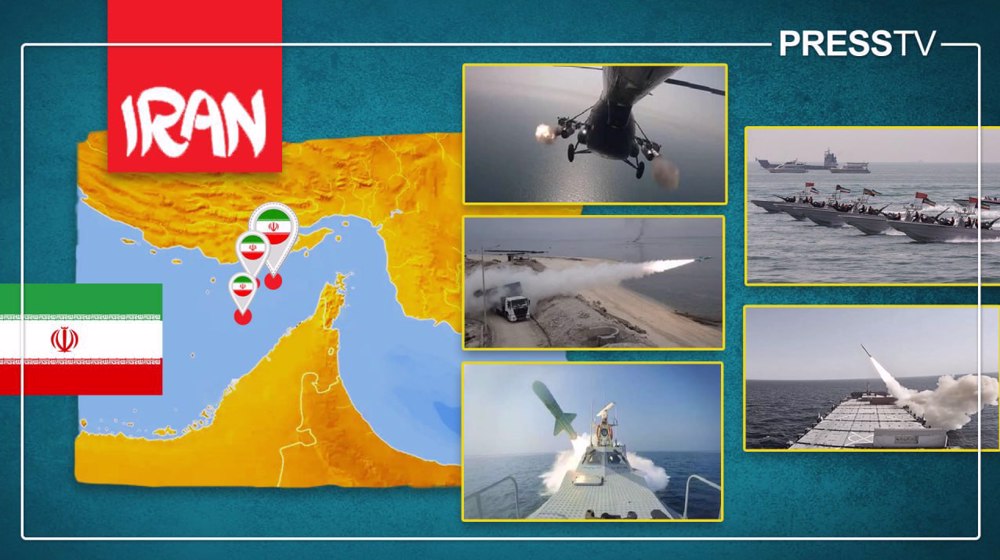
In the strategic labyrinth of the Persian Gulf, where the three islands – Abu Musa, Greater Tunb, Lesser Tunb, and Sirri – function as sovereign strongholds of the Islamic Republic of Iran, the country’s defensive architecture is built upon an advanced and layered doctrine.
This doctrine represents an intelligent synthesis of indigenous technologies, asymmetric warfare tactics, and comprehensive Anti-Access/Area Denial (A2/AD) capabilities designed to neutralize any hostile threat.
These islands – frequently described in military literature as Iran’s “unsinkable aircraft carriers” – not only exert full control over the vital chokepoint of the Strait of Hormuz, through which more than 20 percent of global energy flows and whose disruption could paralyze the world economy, but also operate as multi-mission platforms for persistent surveillance, precise interception, and decisive strike operations, with the ability to extend the engagement envelope deep into the Indian Ocean.
The “Shahid Mohammad Nazeri” naval exercise, conducted on December 4-5, 2025, by the Islamic Revolution Guards Corps Navy (IRGC-N), was not merely a direct and resolute response to baseless claims and threats against the islands and also a reminder that they constitute Iran's red line.
During the military exercise, IRGC naval units integrated advanced reconnaissance systems, layered air defense, and saturation strike capabilities to simulate hostile penetration scenarios and successfully neutralize them. Conducted across the islands and adjacent waters of the Strait of Hormuz, the Persian Gulf, and the Sea of Oman, the exercise transcended a conventional military drill and constituted a calculated, multi-layered act of active deterrence.
It presented a forceful response to any hostile maneuvering and the destabilizing presence of extra-regional naval forces, particularly US carrier strike groups such as the USS Abraham Lincoln, which had anchored near Iranian territorial waters.
Through the language of hard power and indigenous technology, Iran’s defense doctrine conveyed an unequivocal message: the security of the islands and Iran’s territorial waters is a red line. Any violation will incur exorbitant, irreversible, and deeply regrettable costs from heavy human losses to severe disruption of global energy supply chains.
Let’s examine the layered architecture of this defensive system, focusing on the key technologies that guarantee Iran’s unquestionable sovereignty over these islands and transform any military adventurism into a strategic nightmare for the enemy.
First layer: Persistent intelligence, surveillance, and reconnaissance
The first layer of this defensive fortress, based on early detection, continuous monitoring, and situational awareness, is managed by advanced Iranian reconnaissance UAVs.
At the forefront stands the Mohajer-6, an indigenous reconnaissance-strike platform developed by Iran’s aerospace industries and operational since 2018. With a wingspan of 10 meters, fuselage length of 5.67 meters, endurance of up to 15 hours, maximum speed of 200 km/h, and an operational ceiling of 18,000 feet, the Mohajer-6 can carry up to 100 kilograms of payload.
This includes advanced electro-optical/infrared (EO/IR) sensors for day-night imaging, laser designators for target marking, and precision-guided munitions such as the Qaem EO-guided missile with a 6 km range or the Almas missile employing AI-assisted guidance with an 8 km range.
Derived from the Selex ES Falco design but extensively localized, the Mohajer-6 is powered by a Rotax 912 engine, whose low fuel consumption and acoustic signature enable covert operations. From underground bases on Abu Musa and Greater Tunb, these UAVs conduct persistent ISR missions.
IRGC Navy launches ballistic, cruise missile during major drill
— Press TV 🔻 (@PressTV) December 6, 2025
Follow: https://t.co/LWoNSpkJSh pic.twitter.com/6zJMDcpNc8
During the Martyr Mohammad Nazeri exercise, Mohajer-6 drones detected simulated hostile vessels at extended ranges and relayed targeting data directly to air defense systems for precise interception.
According to IRGC reports, the platform has been used in real-world operations to monitor US naval movements in the Persian Gulf, including carrier groups such as the USS Harry S. Truman, transmitting encrypted data via indigenous secure datalinks to IRGC-N command centers.
Complementing the Mohajer-6, platforms such as the Ababil-5 operate within this layer. With an endurance of 10–12 hours, speed of 200 km/h, ceiling of 5,000 meters, and an 80-kg payload capacity, the Ababil-5 is optimized for low-altitude reconnaissance over the Strait of Hormuz.
Operational since 2022, it integrates EO/IR sensors and synthetic aperture radar (SAR), making it effective under adverse weather conditions. During earlier exercises, it demonstrated automated target classification using AI-based image processing, distinguishing military vessels from civilian shipping.
Operationally, these UAVs function in coordinated swarm networks, providing 360-degree coverage. In scenarios involving the detection of hostile carrier strike groups, such as the USS Dwight D. Eisenhower, deployed near Iranian waters in 2025, targeting data with sub-5-meter accuracy is transmitted to defensive layers, enabling asymmetric engagement strategies.
This reconnaissance layer compresses reaction time from minutes to seconds, allowing pre-emptive neutralization of threats before they reach Iranian territorial waters.
Second layer: Integrated air defense
Upon breaching the reconnaissance envelope, hostile aerial threats encounter a dense, layered air defense network that effectively converts the disputed islands into a no-fly zone.
At the core of this layer is the Majid short-range air defense system, an indigenous platform operational since 2021. Utilizing the AD-08 missile, Majid has an engagement range of 8–10 km, interception altitude up to 6 km, and can engage targets traveling at speeds up to Mach 2.
Designed to counter low-altitude threats such as UAVs, sea-skimming cruise missiles, and attack helicopters, it employs semi-active electro-optical guidance, enabling accurate interception even in the dense fog typical of the Persian Gulf.
Powered by AI-assisted fire-control systems, Majid can simultaneously engage up to four targets. During the 12-day war imposed on Iran in June, it reportedly achieved the highest UAV kill count, intercepting Israeli platforms such as the Heron, Hermes-900, and Hermes-450 with success rates exceeding 90 percent.
Mounted on mobile platforms like the Aras-2 tactical vehicle, Majid carries 4–8 missiles with a reaction time of fewer than 10 seconds. Integrated with detection radars such as Kashf-99, Majid forms a highly responsive defense network on Abu Musa and Greater Tunb.
This layer is reinforced by systems such as 15 Khordad, with a 45 km range, and Mersad, the indigenous version of the MIM-23 Hawk system. Operational since 2019, 15 Khordad can track six targets simultaneously and has proved effective against medium-altitude threats, including cruise missiles, during the 12-day war.
Mersad, equipped with semi-active radar-guided missiles and electronic warfare integration (notably the Basir system), operates on Lesser Tunb to disrupt hostile signals. During the Shahid Mohammad Nazeri exercise, Majid successfully intercepted simulated UAVs at 500 meters altitude, while 15 Khordad neutralized incoming cruise missile threats.
IRGC Navy launches major Persian Gulf drill with warnings to US ships https://t.co/uNyYf6UwVC
— Press TV 🔻 (@PressTV) December 4, 2025
Mobile maritime air defense: The Nawab system
The pinnacle of innovation in maritime defense is embodied in the Nawab system and its deployment aboard fast patrol craft, introducing – for the first time globally – the operational concept of mobile naval air defense.
Nawab, the navalized version of the Zoubin missile, boasts a 15 km engagement range, interception altitude up to 8 km, and target speeds of Mach 3. Mounted on Zolfaghar-class boats, derived from the British Bladerunner 51 hull acquired in 2009, the platform offers unmatched mobility. The Zolfaghar craft measures 15.5 meters in length, 4.4 meters in beam, displaces 10 tons, and reaches speeds of 60 knots, powered by twin 1,500-hp diesel engines.
Nawab employs a vertical launch system (VLS) with four launch cells, a unique global innovation, allowing missile launches at high speed without reducing maneuverability. Integrated 360-degree dome radars and combined semi-active radar/EO guidance provide interception success rates above 85 percent.
Low-smoke propulsion and onboard electronic warfare systems further enhance survivability. During recent exercises, Nawab successfully intercepted UAV targets while maneuvering at 50 knots, providing a mobile air defense umbrella for IRGC fast-attack formations.
Offensive layer: Saturation strike doctrine
The offensive layer relies on extending the engagement range through saturation missile strikes.
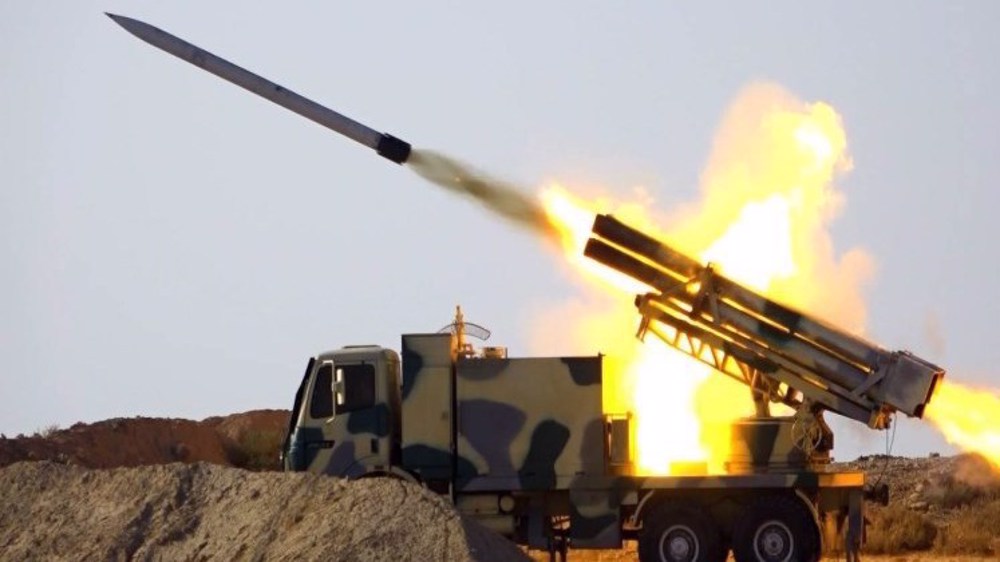
At its core is the Qader anti-ship cruise missile, operational since 2011, with a range exceeding 300 km and a 165-kg penetrating warhead. Employing integrated INS and active radar guidance, Qader achieves sub-10-meter accuracy. Powered by an indigenous turbojet engine and flying at Mach 0.9 in sea-skimming mode, it evades hostile radar detection.
Deployed on mobile coastal launchers across Abu Musa, Qader can strike targets deep into the Indian Ocean. During the Shahid Mohammad Nazeri exercise, it successfully destroyed simulated naval targets at 250 km.
Complementing Qader are the Nasr and Ghadir missiles, enabling saturation tactics. Nasr, with a 35 km range and 130-kg warhead, is based on the Chinese C-704 and has been operational since 2010.
Ghadir, with a 300+ km range, enhances long-range strike capability. Combined salvos of 20–30 missiles overwhelm enemy systems such as the Aegis system and Phalanx CIWS, ensuring mission success.
Missiles with strike radius beyond Persian Gulf length used in IRGC naval drill: Parliament speakerhttps://t.co/3AWriif5ZA
— Press TV 🔻 (@PressTV) December 7, 2025
Close-range layer: Loitering munitions and FPV drones
The final layer consists of cost-effective precision strike systems, including FPV drones and loitering munitions. Shahed-131 and Shahed-136, operational since 2021, carry warheads up to 50 kg. Shahed-131 weighs 120 kg, reaches speeds of 185 km/h, and has a 900 km range.
Shahed-136, weighing 200 kg with a 40-kg warhead and 2,000 km range, is widely regarded as an “economical kamikaze drone.” Operating from underground bases on Qeshm and Abu Musa, these platforms deploy in swarms of 10–20 units, overwhelming enemy defenses.
Additional loitering systems, such as the jet-powered 358 missile, with a 100 km range and autonomous guidance, specialize in counter-UAV roles. At costs below $20,000 per unit, these systems transform the defensive perimeter into a dense aerial minefield.
This layered defensive architecture clearly demonstrates that the Persian Gulf islands are not merely symbols of Iranian sovereignty but pivotal asymmetric deterrence bastions.
The integration of Mohajer-6 UAVs, Majid air defense systems, Nawab maritime innovations, Qader and Nasr cruise missiles, and Shahed loitering munitions forms an impenetrable network.
As the Shahid Mohammad Nazeri exercise made clear, Iran’s sovereignty over these islands is a red line enforced by indigenous technology and national resolve.
Persian Gulf remains an arena of competing wills – one in which Iran stands fully prepared to respond decisively to any threat, while debunking baseless claims on the trio islands.
Mohammad Molaei is a Tehran-based military affairs analyst.
(The views expressed in this article do not necessarily reflect those of Press TV)

Iran’s judiciary to launch cases against collaborators in June US-Israel aggression

Dual national faces trial for spying for Israel during 12-day war: Iran’s judiciary

Three policemen killed in shootout with terrorists in southeast Iran



Trump ally seeks role in sprawling US base project near Gaza
Maduro hails Iran as model in fight for international rule of law
Iran’s ‘unsinkable carriers’: How Persian Gulf trio islands shape deterrence in Strait of Hormuz
Two killed in Israeli strikes in southern Lebanon in latest ceasefire violation
Pro-Israel donor urges Trump to seek unconstitutional third term
Yemen's Ansarullah leader urges Muslim action after Qur'an insult in US
FM: Iran's ‘strategic partnership’ with Russia basis for multilateral order
Iran summons Cyprus ambassador over meddlesome remarks on its islands





 PressTV NEWSLETTER now
 This makes it easy to access the Press TV website