US denial of Iran’s uranium enrichment rights remains main sticking point: Araghchi

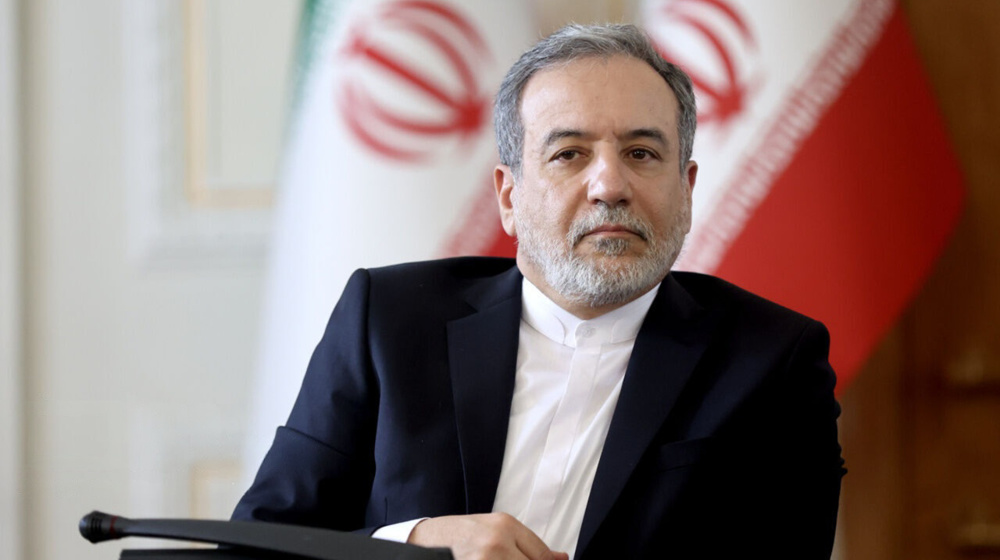
Iran’s Foreign Minister Abbas Araghchi says the central point of disagreement with the US is Washington’s refusal to acknowledge Iran’s right to peaceful nuclear technology, emphasizing that Tehran remains fully committed to its nuclear program despite the US-Israeli attacks against its facilities.
In an interview with Japan’s Kyodo News Agency on Saturday, Araghchi reaffirmed Tehran’s commitment to uranium enrichment, asserting its right to pursue peaceful nuclear technology.
“The main point is that the United States should recognize Iran’s right to peaceful use of nuclear technology, including uranium enrichment. This has always been our right and remains so under international law,” he said.
He added that as a committed member of the Non-Proliferation Treaty (NPT), Iran, like Japan, is entitled to peaceful nuclear use.
US President Donald Trump is demanding that Iran fully stop uranium enrichment, a condition that Tehran has refused to accept.
Regarding the possibility of resuming negotiations with the US, the Iranian diplomat said it depends entirely on Washington.
“If they change their approach and are prepared for a fair and mutually beneficial negotiation, we are prepared as well. But negotiation is different from dictation. For the time being, we are not convinced they are ready for a real, serious negotiation,” he said.
He added that Iran does not have a good experience negotiating with the United States, citing the US withdrawal from the 2015 nuclear deal and recent 2025 negotiations, during which Israel, with US support, launched a military aggression against Iran in June.
According to Araghchi, these events show that “the US is currently not prepared for serious, reciprocal negotiations.”

He reiterated that once the US accepts this logic—trust-building regarding Iran’s peaceful nuclear program in exchange for lifting sanctions—negotiations can resume.
Araghchi condemned the bombing of Iran’s nuclear facilities during the 12-day war, calling it “perhaps the biggest violation of international law.”
On June 13, Israel launched an unprovoked war against Iran, assassinating many high-ranking military commanders, nuclear scientists, and civilians.
More than a week later, the United States also entered the war by bombing three Iranian nuclear sites in a grave violation of the United Nations Charter, international law, and the NPT.
In response, the Iranian Armed Forces targeted strategic sites across the occupied territories as well as the al-Udeid air base in Qatar, the largest American military base in West Asia.
The Iranian foreign minister emphasized that Iran’s facilities were bombed without justification, and no reports indicate any non-peaceful intent, as recently confirmed by the International Atomic Energy Agency (IAEA ) Director General Rafael Grossi.
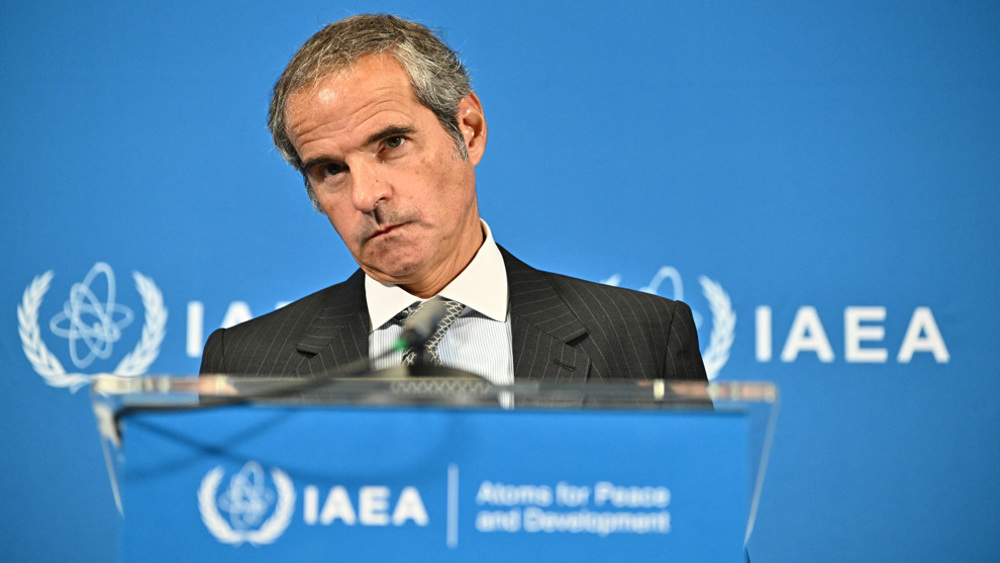
While Iran maintains close contact with the IAEA, Araghchi stressed that inspections cannot resume until security and safety risks are addressed.
He added that if the US and others want Iran to return to diplomacy and cooperation with the agency, they must first earn Iran’s trust and provide guarantees that attacks will not occur during negotiations or IAEA oversight.
In relation to Japan, Araghchi stated that Iran has no bilateral problems with Japan and that any issues stem from outside their direct relations.
He emphasized that while Japan is an ally of the United States, it is also a friend of Iran, and their historically friendly relations provide opportunities for greater cooperation than with many Western countries.
“I have no doubt that Japan has good knowledge on how to improve the safety of nuclear facilities, and that knowledge can be shared with Iran,” he said, citing extensive work on environmental, medical, and technical safety measures in the aftermath of nuclear crises.
Japan experienced the US atomic bombings of Hiroshima and Nagasaki in 1945 and the Fukushima Daiichi nuclear accident in 2011.
Leader’s martyrdom will drive Iran to greater dignity and victory: Senior cleric
Iran calls on IAEA to condemn fresh US-Israeli attacks on nuclear site
Iran says has ‘no choice’ but to fight back, holds no enmity toward American people



US-allied fuel tanker attacked by Iran still burning in Strait of Hormuz: IRGC
Attacks on hospitals, schools ‘strike at life itself’: Pezeshkian
Iran’s attacks on US bases ‘legitimate’ response to source of aggression: Araghchi
IRGC targets US intelligence centers, military depots in 11th wave of attacks
US-Israeli attacks damage 5 hospitals, medical centers in Iran: MP
Unlike US, Iran prepared for a long war: Security chief
Missile sirens will never stop in Israeli-occupied territories, Iran warns
Leader’s martyrdom will drive Iran to greater dignity and victory: Senior cleric




 PressTV NEWSLETTER now
 This makes it easy to access the Press TV website