
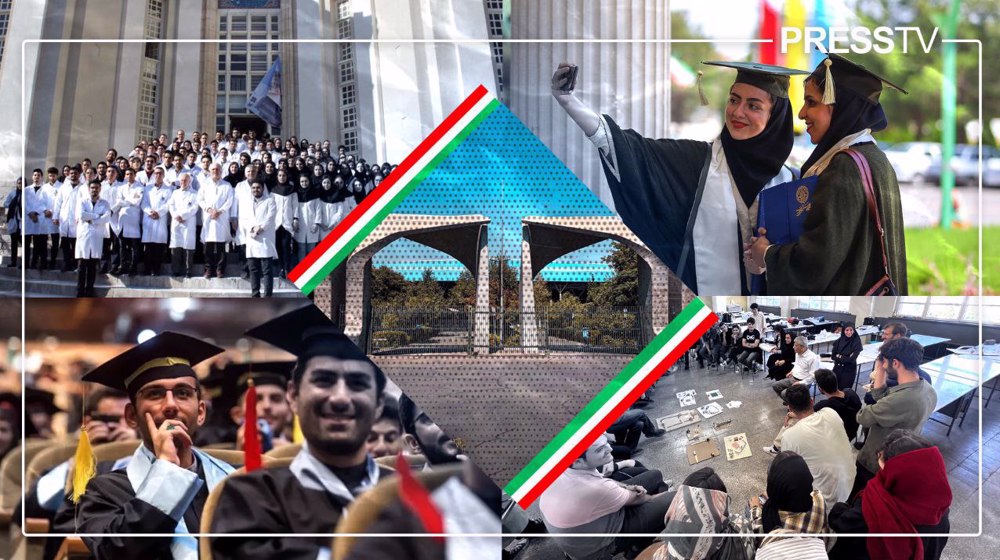
The landscape of Iranian higher education has been reshaped so dramatically since 1979 that the country now hosts one of the largest university networks in the region.
What was once a restricted system has grown into a sprawling national enterprise of more than 2,500 institutions, spanning public universities, applied science institutes, distance learning centers, non-profit colleges, and a range of specialized academies.
This transformation has altered the academic culture of the country, redistributed intellectual activity to provincial regions, and generated a research infrastructure that did not exist on such a scale in earlier decades.
The growth began in the immediate aftermath of the revolution, when the new government viewed educational expansion as central to rebuilding the country’s cultural foundation.
The state launched an extensive effort to broaden access to education, starting with nationwide literacy campaigns and continuing with the rapid establishment of schools and higher education centers.
The increase in the number of schools set the groundwork for a far larger pool of students prepared for university admission.
Universities themselves became a priority for social and institutional restructuring. The authorities saw the higher education system as a key instrument for training a new generation of professionals aligned with national goals.
The small pre-revolutionary system lacked the capacity to accommodate the growing aspirations of the population, and the early post-revolution years introduced a rapid and intentional scaling-up of institutions.
This shift marked the beginning of an academic expansion that would shape the country’s intellectual trajectory for decades.
By the 1990s and early 2000s, the system entered a period of intense growth. Enrollments expanded sharply, eventually rising from fewer than 200,000 students around the time of the revolution to millions in subsequent decades.
Undergraduate programs multiplied across the country, but the most notable change came in the diversification of graduate education. Master’s and doctoral programs, once limited in number and scope, became fixtures of the academic environment.
Their expansion prompted investment in laboratories, research centers, and specialized facilities, many of which remain central to Iran’s scientific activity today.
The broadening of access reshaped the social composition of the university population. Women, in particular, became central participants in higher education.
By the late 1990s they surpassed men in entrance examinations to public universities, and their representation has remained high, especially in fields such as the humanities and social sciences. Their presence has altered classroom dynamics, academic culture, and patterns of participation in research.
It has also influenced the internal discussions within universities regarding equity, disciplinary growth, and professional training.
As institutions expanded, the country developed a network of research hubs that complemented traditional university structures. Technology parks and incubators were established near major academic centers to foster applied science and entrepreneurship.
Their purpose was not merely educational; they were designed to facilitate the conversion of academic research into industrial and technological outputs.
These parks created spaces where faculty members, graduate students, and early-stage companies could collaborate. They also encouraged universities to adopt more research-oriented missions.
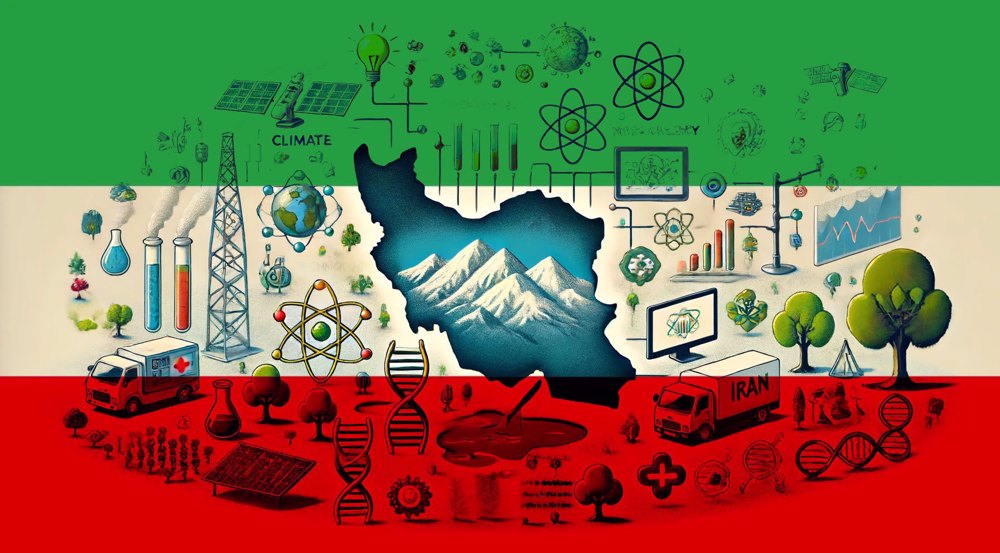
The scale of the university system elevated research production to a national concern. After a period of disruption in the 1980s, publication output began rising markedly in the 1990s and accelerated in the early 2000s.
International indexes record a steep increase in scientific articles originating from Iranian universities, with contributions across medicine, engineering, nanotechnology, energy studies, aviation sciences, and artificial intelligence.
This rise was tied to the growing number of graduate students and the proliferation of research centers embedded within universities.
The entrance of Iranian institutions into global ranking systems further affected their development. From 2017–18 onward, their presence in international rankings became more consistent.
Administrators began adjusting their institutional strategies to align with ranking metrics, paying attention to categories such as research impact, innovation, international collaboration, and academic visibility.
These pressures influenced faculty hiring, resource allocation, and program development, gradually shifting universities toward more research-driven practices.
One of the less discussed consequences of this expansion is the influence of universities on regional development. Many provincial cities received campuses that became anchors of local economic and cultural life.
These institutions introduced new streams of student migration, generated demand for housing and services, and fostered local knowledge economies. Their presence helped shape the character of cities that were previously peripheral to the country’s intellectual activity.
The administrative structure of the system adds another layer of complexity. Oversight is divided primarily between the Ministry of Science, Research, and Technology and the Ministry of Health, each presiding over distinct segments of higher education.
Medical universities, for example, operate under the latter and maintain robust research programs linked to national health priorities. This dual structure influences budget distribution, program design, and research agendas across the country.
The curricular landscape has expanded along with institutional growth. Universities now offer more than 3,000 fields of study, ranging from traditional disciplines to new areas tied to technological and scientific developments.
This diversification requires substantial investment in equipment, libraries, laboratories, and faculty development. It also demands constant curricular revision to keep pace with global academic trends and emerging technologies.
The transformation of Iran’s university sector since 1979 represents a sustained reorganization of intellectual, social, and research life in the country.
The proliferation of institutions, the rise of graduate studies, and the spread of research centers have built an academic infrastructure that now plays a central role in shaping Iran’s scientific activity and educational culture.
 This makes it easy to access the Press TV website