Iran deepens regional engagement as SCO Council of Heads of Government meeting opens in Moscow
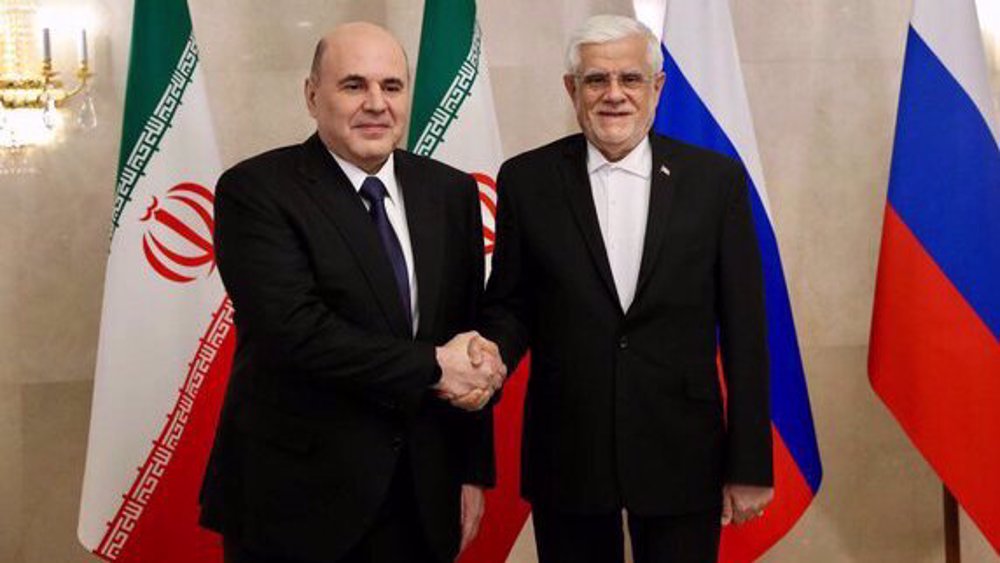
The 24th meeting of the Shanghai Cooperation Organization (SCO)'s Council of Heads of Government (Prime Ministers) has opened in Moscow, marking the 2nd day of a high-profile visit by Iran’s First Vice President Mohammad-Reza Aref to the Russian capital.
The summit, hosted at Russia’s National Center, kicked off on Tuesday, bringing together prime ministers and senior officials from the Islamic Republic, Russia, China, India, Pakistan, Kazakhstan, Uzbekistan, Tajikistan, Kyrgyzstan, and Belarus, an expansive gathering credited by experts for underscoring the SCO’s growing geopolitical footprint.
The event, where many member states were represented at the head-of-government level, featured Aref and other heads of delegation being formally received by Russian Prime Minister Mikhail Mishustin.
High-ranking observers from Egypt, Qatar, Kuwait, Bahrain, Mongolia, and Turkmenistan, along with chiefs of several international bodies, joined the broader SCO format later in the day.
According to the Iranian delegation, the meeting’s agenda emphasized greater use of national currencies in trade, expansion of joint energy and transport projects, and strengthened regional cooperation.
Russian media outlets noted that priority issues included boosting trade, investment, and humanitarian exchange across the organization.
SCO Secretary General Nurlan Yermekbayev said the Moscow meeting sought to inject “new momentum” into intra-organizational cooperation, reinforcing directives issued by national leaders.
With the SCO now uniting nearly 60 percent of Eurasia and more than 3.4 billion people, Yermekbayev stressed that practical economic and humanitarian collaboration remained central to the organization’s mission.
He pointed to a comprehensive agenda aligned with member states’ current development priorities and highlighted ongoing efforts such as creation of a specialized development bank, new security-threat response centers, and the 2026-2035 strategic roadmap.
Bilateral diplomacy on the sidelines added further weight to the summit.
Aref met Mishustin as part of the peripheral meetings, while the Russian prime minister also held separate talks with his Chinese and Mongolian counterparts.
The Iranian vice president’s engagements culminated in a meeting with Iranian diplomats based in Russia, where he outlined Tehran’s long-term regional strategy and the significance of its presence in organizations such as the SCO and the Eurasian Economic Union.
Iran’s First Vice President Mohammad Reza Aref, upon arriving in Moscow for the 24th SCO Council meeting, said cooperation within the Shanghai Cooperation Organization contributes to peace and friendship among nations.
— Press TV 🔻 (@PressTV) November 17, 2025
Follow: https://t.co/mLGcUTSA3Q pic.twitter.com/KqnqREZbYI
He recalled that Iran’s push towards membership in key regional blocs began in the early 2000s, driven by the understanding that Tehran had to assume a meaningful role in the emerging Eurasian architectures.
“Strengthening Iran’s standing in regional unions has been a strategic priority for two decades,” he noted, stressing the cultural, historical, and civilizational ties linking Iran to many Eurasian states.
The official underlined that developing multilateral partnerships was now a main pillar of the Iranian foreign policy.
He stated that cultural diplomacy was particularly effective in areas where the Islamic Republic shared deep civilizational affinities with its neighbors.
Aref also described Russia as a strategic partner with significant capacity, emphasizing that Tehran-Moscow cooperation was guided by mutual interests, national security considerations, and regional dynamics.
The countries, he added, have reached a comprehensive strategic agreement and maintained close coordination on key issues, including Russia’s firm stance against the European trio of the UK, France and Germany’s attempt to activate the so-called “snapback” mechanism inside a 2015 nuclear deal.
While encouraging deeper collaboration in advanced technology, trade, tourism, science, and culture, Aref said sustained public outreach remained essential.
He pointed to polls showing that anti-Iran sentiment had little traction among Russians and called for shared interests to be further explained to Iranians while underpinning the strategic partnership.
Speaker Qalibaf: US strategy of bullying and broken promises has failed
Iranian strikes leave hundreds of US troops with lasting brain injuries
Iran condemns US nuclear buildup, warns Washington's policies threaten humanity


‘Time to rely only on ourselves, embrace true brotherhood’: Iran tells regional Muslim nations
US on the verge of 'significant strategic defeat' against Iran: Ex-US negotiator
VIDEO | Tunisia’s medicine price hikes fuel social concerns over healthcare access
AIPAC eyes another push against El-Sayed after $32 million defeat in Michigan primary
Any country joining Saudi aggression is aggressor, Yemen warns after joint ‘defense' deal
VIDEO | Press TV's news headlines
Persian Gulf security must come from within the region, not outside: Iran deputy FM
Iraqi Resistance 'delays' planned retaliatory strike on US-Saudi interests


 PressTV NEWSLETTER
now
PressTV NEWSLETTER
now
 This makes it easy to access the Press TV website
