
By Maryam Qarehgozlou
As part of a power struggle between Democrats and Republicans, US lawmakers have released more than 20,000 pages of documents from the estate of disgraced financier and convicted sex offender Jeffrey Epstein, including several that reference President Donald Trump.
Early Wednesday, Democrats on the House Oversight Committee — the federal body charged with monitoring government operations — published three email exchanges, including correspondence between Epstein and his longtime associate Ghislaine Maxwell, who is currently serving a 20-year sentence for sex trafficking.
The correspondence, sent in 2011, 2015, and 2019, confirms that the incumbent US president, who has been avoiding any reactions, was aware of Epstein’s behavior toward underage girls
Epstein referred to Trump as “the dog that hasn’t barked,” said Trump had “spent hours” at his home with one of Epstein’s victims, and asserted that “of course” Trump “knew about the girls.”
The committee also released emails between Epstein and author and journalist Michael Wolff, known for writing multiple books on Trump.
Shortly after, House Republicans countered with their own massive trove of documents, accusing Democrats of “cherry-picking” evidence and attempting to “create a fake narrative" to slander Trump.
Their documents also reference Trump, but largely in relation to his political career rather than Epstein’s crimes.
All materials were obtained through a subpoena issued to Epstein’s estate as part of the committee’s broader probe into the federal handling of Epstein’s case.
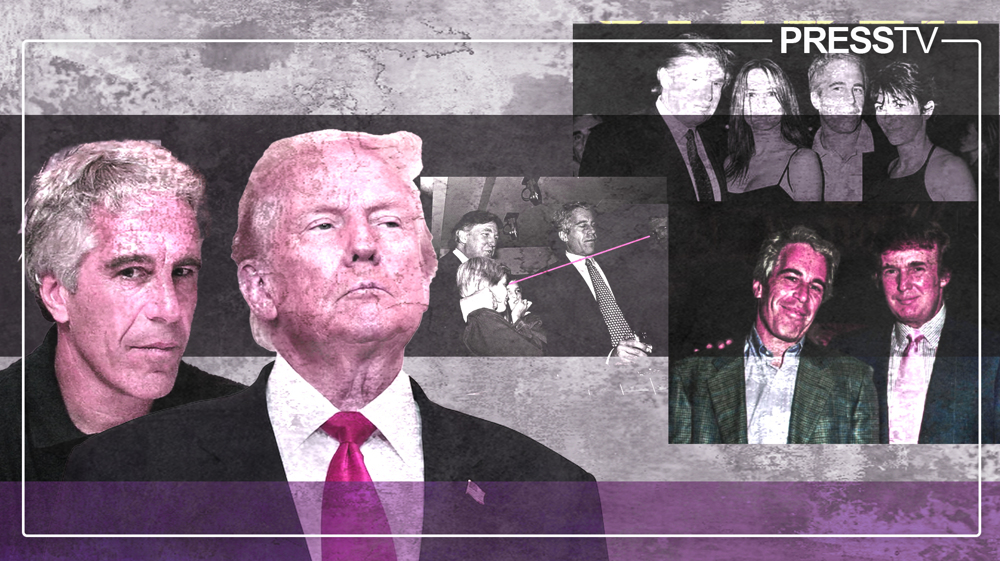
‼️INFOGRAPHIC: Newly released emails expose convicted sex offender Jeffrey Epstein’s extensive communications with high-profile figures in politics, finance, media, and royalty, including Donald Trump, Tom Barrack and Peter Thiel.
— Press TV 🔻 (@PressTV) November 15, 2025
Follow: https://t.co/B3zXG74hnU pic.twitter.com/KrezCcyQDy
Who was Jeffrey Epstein?
Epstein was a wealthy New York financier who ascended rapidly from a brief teaching stint at the Dalton School in the 1970s to becoming a partner at Bear Stearns.
His fortune allowed him to acquire luxurious properties and cultivate powerful relationships across political, cultural, and business elites.
His social circle included Bill Clinton, Prince Andrew, Donald Trump, and former Israeli Prime Minister Ehud Barak. Behind the façade of privilege, Epstein was a long-time sexual predator.
Reports began surfacing in 2005, when he was accused of molesting a 14-year-old girl at his Palm Beach home, leading investigators to discover photos of multiple underage girls.
A major Miami Herald investigation later exposed years of abuse and prosecutorial failures.
In 2008, federal prosecutor Alexander Acosta negotiated a secret plea deal that abruptly shut down an active FBI investigation and allowed Epstein to serve only 13 months in custody — with daily “work release” privileges.
In July 2019, Epstein was arrested again, this time on federal sex-trafficking charges involving underage girls between 2002 and 2005.
On August 10, 2019, he was found dead in his jail cell. The death was officially ruled a suicide, though the circumstances remain widely viewed as suspicious.
Trump’s Justice Department and the FBI insisted there was no evidence of foul play and released surveillance footage showing no one entered the area around the time of his death — although the 10-hour video featured a “missing minute,” which authorities attributed to an outdated recording system that resets daily.
✍️ Feature - Inside the Epstein saga: Untangling his ties to Israeli spy agency, US presidents
— Press TV 🔻 (@PressTV) July 27, 2025
By Maryam Qarehgozlou
Read More: https://t.co/LkZKBtKqBS pic.twitter.com/sxcvDv4A57
How Epstein knew Trump
Throughout the 1990s, Trump and Epstein frequently appeared together at social events in New York and Florida.
Trump even praised Epstein in a 2002 interview with New York Magazine, calling him a “terrific guy” who “likes beautiful women as much as I do — and many of them are on the younger side.”
But when Epstein was arrested in 2019 on federal sex-trafficking charges, Trump abruptly distanced himself, telling reporters he was “not a fan” and had not spoken to Epstein “in 15 years.”
In July, The Wall Street Journal revealed a “bawdy” birthday letter to Epstein bearing Trump’s name and signature — part of a leather-bound album Maxwell created for Epstein’s 50th birthday in 2003.
Trump later sued the newspaper, claiming the letter was “FAKE.”
What do the newly released emails reveal?
Trump has repeatedly denied any wrongdoing and insists he never knew about Epstein’s abuse. But newly released emails show a different story.
In one April 2011 exchange, Epstein wrote to Maxwell that Trump had “spent hours” at his home with one victim.
Epstein told Maxwell: “the dog that hasn’t barked is trump… [redacted victim] spent hours at my house with him… he has never once been mentioned.”
Maxwell responded: “I have been thinking about that…”
Democrats did not release the victim’s name, but in the cache of documents released on Wednesday by the House Oversight Committee, the name is shown as Virginia Giuffre, who sued disgraced Andrew Mountbatten-Windsor (formerly Prince Andrew of the United Kingdom, before he was stripped of his royal titles last month) for rape and sexual assault before she died by suicide in April this year.
The White House confirmed Giuffre’s identity on Wednesday.
Press secretary Karoline Leavitt said Giuffre had “repeatedly said President Trump was not involved in any wrongdoing” and claimed Trump once expelled Epstein from Mar-a-Lago for “being a creep” toward female employees, including Giuffre.
Observers dismissed the statement as a clumsy attempt to shield Trump.
The emails also contradict Maxwell’s remarks to Deputy Attorney General Todd Blanche in July, when she claimed she didn’t “recall ever seeing Trump” at Epstein’s home — a statement now plainly disproven.
A US Congressional Oversight Subcommittee voted to subpoena the Department of Justice for records related to the late convicted sex offender Jeffrey Epstein, with support from three Republicans and Democrats.
— Press TV 🔻 (@PressTV) July 24, 2025
Follow Press TV on Telegram: https://t.co/B3zXG74hnU pic.twitter.com/DpcAXDM30a
Epstein’s emails with journalist Michael Wolff
Epstein also exchanged emails with US journalist Michael Wolff, author of several Trump exposés.
Those communications — released by Democrats on Wednesday — show the two discussing strategy and media manipulation involving Trump.
In December 2015, Wolff warned Epstein that CNN planned to raise questions about Trump’s relationship with him.
Epstein asked, “If we were to craft an answer for him, what do you think it should be?”
Wolff responded, “I think you should let him hang himself. If he says he hasn’t been on the plane or to the house, then that gives you a valuable PR and political currency. You can hang him in a way that potentially generates a positive benefit for you, or, if it really looks like he could win, you could save him, generating a debt. Of course, it is possible that, when asked, he’ll say Jeffrey is a great guy and has gotten a raw deal and is a victim of political correctness, which is to be outlawed in a Trump regime.”
In October 2016, just weeks before the election, Wolff pushed Epstein to go public: “There’s an opportunity to come forward this week and talk about Trump … and help finish him. Interested?”
There is no record of Epstein replying.
A 2019 email from Epstein to Wolff warned that Trump “knew about the girls” and had once asked Maxwell to stop.
Wolff later told The Daily Beast that he was deliberately “nice” to Epstein to learn more about Trump, whom he described as: “the best friend of evil… a deeply, deeply diabolical person.”
Wolff said he urged Epstein to reveal what he knew: “‘Why don’t you go public with these pictures?’”
But he believed Epstein was afraid of Trump becoming president: “Epstein was fearful about what would happen to him if Donald Trump became president.”
Wolff added that he had long considered Trump “unfit to be president.”
Last month, Wolff said Melania Trump has threatened to sue him for more than $1 billion over his comments suggesting she met Trump through Epstein’s social circle.
Epstein also said to possess photos of Trump with girls in bikinis in his kitchen, and described Trump “almost walking through the door, leaving his nose print on the glass” as young women swam in Epstein’s pool.
He also referenced a girlfriend whom he claimed he “gave to Donald.”
More emails from the 20,000-page release
Documents released by Republicans reveal hundreds of additional emails between Epstein and his associates, many of them obsessively tracking Trump’s political ascent from 2015 to 2018 and his whereabouts.
In a December 2018 exchange with former Treasury Secretary Lawrence H Summers, Epstein called Trump “borderline insane.” Summers asked, “Will Trump crack into insanity?”
Epstein replied that Trump’s instability was “not a new phenomenon,” adding: “in the past he was told not to come out of his apt. thats how he got through near personal bankruptcy.”
Epstein added that Trump’s “strength is remarkable,” but warned: “I hope someone close to him gets indicted, but not sure, otherwise the pressure of the unknown will force him to do crazy things.”
In a 2017 message to Summers, Epstein wrote: “I have met some very bad people — none as bad as Trump… not one decent cell in his body.”
Epstein emails indicate Trump knew of sexual abuse, 'spent hours' with victimhttps://t.co/yLxfCAg9EY
— Press TV 🔻 (@PressTV) November 12, 2025
Responses to the emails
Clearly embarrased, Trump immediately dismissed the emails as a “hoax” in a social media post.
“The Democrats are trying to bring up the Jeffrey Epstein Hoax again because they’ll do anything at all to deflect on how badly they’ve done on the Shutdown, and so many other subjects,” he wrote on Truth Social platform on Wednesday afternoon, pointing to the longest US government shutdown in history.
White House spokesperson Abigail Jackson echoed that line at a briefing in Washington, DC, insisting: “These emails prove literally nothing.”
For years, Trump and several members of his administration hinted at undisclosed information within the so-called “Epstein files,” suggesting that critical details were being withheld from the public.
During Trump’s 2024 campaign, the full release of the files became a central talking point, with Trump promising unprecedented transparency once in office.
Since returning to the White House, however, the release of Epstein-related material has been slow, inconsistent, and at times contradictory.
Documents have emerged in scattered batches from various agencies, news outlets, and congressional offices — far from the full disclosure repeatedly promised.
In February, Attorney General Pam Bondi announced what she called the “first phase” of the declassified Epstein files: flight logs, an evidence list, and a redacted contact sheet.
Bondi pledged more disclosures once victims’ names could be protected.
When Fox News host John Roberts asked Bondi that month whether the Justice Department would release a list of Epstein’s “clients,” she replied: “It’s sitting on my desk right now to review.”
But in July, the Justice Department issued a memo abruptly reversing expectations, declaring there was no incriminating client list.
“There was also no credible evidence found that Epstein blackmailed prominent individuals as part of his actions,” the memo said. “We did not uncover evidence that could predicate an investigation against uncharged third parties.”
The contradiction has fueled public skepticism — including among Trump’s own “Make America Great Again” (MAGA) base, which had long demanded the full truth about Epstein.
In June, tech mogul and Tesla’s CEO Elon Musk claimed on X that “Trump is in the Epstein files.”
He said this was “the real reason” the documents had not been released.
The Justice Department claimed, instead, that victims’ privacy was the sole motive for withholding information. Despite the administration’s resistance, pressure in Congress is intensifying.
On Saturday, Democrats — joined by a small group of Republicans — reached 218 signatures to force a floor vote on a bill requiring all Epstein files to be released within 30 days.
According to Axios and other US media outlets, Trump and senior officials have been privately lobbying Republican representatives—including Lauren Boebert and Nancy Mace—to withdraw their support for the petition.
The bill must now clear the Senate. Finally, Trump himself would have to sign the legislation ordering full release.
A presidential veto is still possible. US presidents can reject any bill, though they must provide a justification for doing so.
If vetoed, the legislation returns to the House, where lawmakers can override the decision with a two-thirds vote — a rare but not impossible outcome given the public demand for answers.
 This makes it easy to access the Press TV website