
By Ali Zeraatpisheh
On October 31, former US President Barack Obama highlighted an issue that is largely overlooked by legacy media but widely debated inside the country.
“More than 47 million Americans, including one in five children, don’t have reliable, affordable access to nutritious food. And as the cost of living skyrockets, more families are depending on SNAP benefits, or food stamps, to put food on the table,” he wrote in a post on X.
“Republicans need to act now to make sure those benefits are available to people who depend on them. If they don’t, millions of children, seniors, and low-income Americans will go hungry ahead of the holidays,” he hastened to add.
Obama’s tweet rekindled the conversation about the persistent and widespread nature of hunger in the US, which the incumbent president, Donald Trump, recently described as “the richest, most respected country in the world, with almost no inflation.”
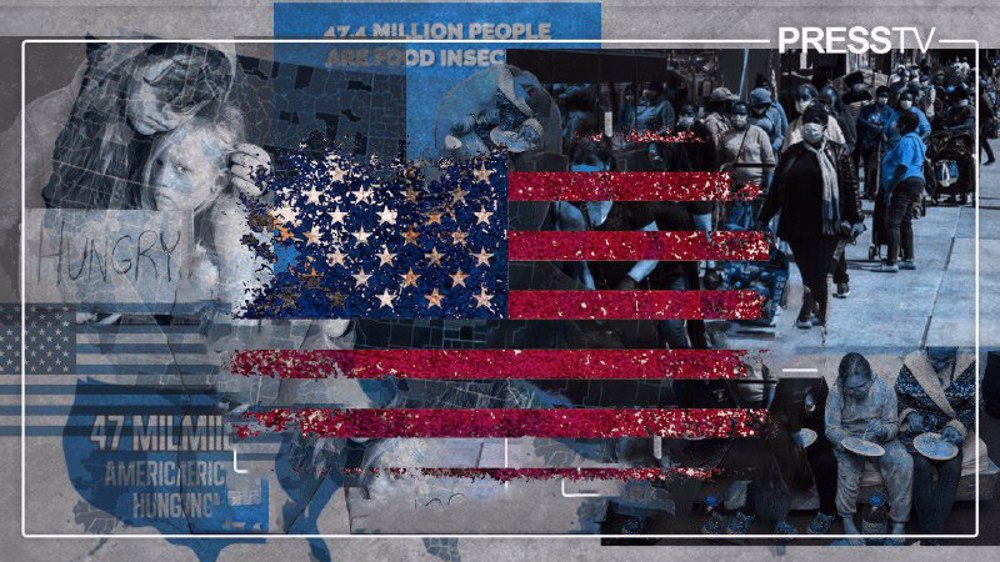
Food insecurity in the country has become a problem that cannot be avoided. In 2024, about 13.5 percent of American households, or 18 million families, were food insecure, up from 12.8 percent in 2023. Among them, 5.1 percent, around 6.8 million households, faced very low food security, meaning they had to eat less or skip meals. In total, 47 million people, including 13.8 million children, lived in homes struggling to obtain enough food.
The data available from 2025 shows no improvement. Surveys indicate that 38.6 percent of Black adults in the country, 34.6 percent of Hispanic adults, and 52.1 percent of adults with disabilities experienced hunger or difficulty affording food. These numbers suggest that food insecurity in 2025 has not declined and may have grown worse.
Families with incomes below the federal poverty line are hit hardest. In 2024, their food insecurity rate reached 38.7 percent. For households with children, the rate was 17.9 percent, about 6.5 million families.
More than 47 million Americans — including one in five children — don’t have reliable, affordable access to nutritious food. And as the cost of living skyrockets, more families are depending on SNAP benefits, or food stamps, to put food on the table.
— Barack Obama (@BarackObama) October 31, 2025
From 2019 to 2025, food prices rose by nearly 28 percent, while federal pandemic-era aid ended. Many families saw living costs rise faster than wages.
As rent, electricity, childcare, and transportation costs increased, households had to choose between paying bills or buying food. For those already living close to the edge, this meant skipping meals, eating less, or buying cheap, unhealthy food to survive.
Inequality runs through every part of the problem. In 2024, 23.3 percent of Black households and 21.9 percent of Hispanic households were food insecure, compared with 9.9 percent of white households. The South had the highest regional rate at 14.7 percent. Single mothers faced the worst conditions, with 34.7 percent of their households being food insecure.
These figures show that hunger in America is not only about income. It is shaped by race, gender, geography, and long-standing inequality. It reflects a system where survival depends on what people can afford, not on what they need.
Why are food prices rising and making hunger worse?
Food has become alarmingly more expensive in the US. For families already struggling, this rise has deepened hunger. In 2024, food prices went up by 5.8 percent, after an even sharper increase in 2023. Since 2019, the total rise has been about 25 percent.
A family that once spent $200 on groceries now spends around $250 for the same items. For low-income households, this difference means skipping meals or falling behind on rent.
Several forces have driven prices higher. General inflation raised the cost of fuel, labor, and raw materials. These costs are spread through every stage of food production and transport. Climate events, disease outbreaks like avian flu, and supply disruptions made things worse. Prices for food bought in stores rose by more than 11 percent and food from restaurants by 7.7 percent.
Families with limited income now face impossible choices. Many buy cheaper, processed foods that fill the stomach but harm health. Others skip meals entirely.
Surveys show that 27 percent of adults missed meals due to grocery costs, and 18 percent considered turning to food assistance. These numbers reveal how close many people live to hunger. One job loss, medical bill, or rent increase can push them over the edge.
Children suffer the most. Food insecurity during childhood damages growth, learning, and health. It leaves lasting effects that follow into adulthood. Yet programs meant to help, such as the Supplemental Nutrition Assistance Program (SNAP), no longer cover the real cost of food. Benefits have stayed flat while prices keep rising.
Early 2025 data shows that food costs remain high. Analysts warn that 2025 and 2026 may bring further increases if inflation and supply problems continue. For many families, this means deeper hardship and greater hunger in the years ahead.
Trump administration scraps annual hunger report after slashing safety net https://t.co/Z535RbT3bP
— Press TV 🔻 (@PressTV) September 22, 2025
What is SNAP and why is it critical?
The Supplemental Nutrition Assistance Program (SNAP) is the largest government program fighting hunger in the US. It gives monthly benefits to households, which can be used to buy food at approved stores. By mid-2025, over 42 million Americans, about 12.5 percent of the population, relied on SNAP. The average monthly benefit was roughly $202 per person, barely enough for two weeks of modest groceries.
SNAP prevents hunger for millions, but it is not enough. In 2024, it kept an estimated 2.8 million people out of poverty, including 1.4 million children. Yet for many families, benefits fall far short of the real cost of food.
A family of four received a maximum of $973 per month under the Thrifty Food Plan. In expensive areas, this does not cover even basic groceries. For households at the lowest incomes, SNAP is often the difference between eating and going hungry.
Eligibility depends on income, assets, and household size. Families earning less than 130 percent of the federal poverty line qualify, roughly $39,000 per year for a family of four. Millions are still excluded due to paperwork, bureaucracy, or lack of access. Some states require work or strict documentation, making it harder for those in need to get help.
SNAP also affects the economy. Every dollar spent generates $1.50 to $1.80 in local economic activity. Grocery stores rely on SNAP purchases to survive. But the program’s support has weakened. Pandemic-era emergency boosts, which increased benefits by over 40 percent, ended in early 2023. Families lost $95 per person per month, sending millions back into hunger as prices remained high.
Early 2025 shows SNAP still supports tens of millions, but enrollment is falling. Preliminary data for 2026 suggest a small decline, not because fewer families are in need, but because barriers prevent access. SNAP remains fragile at a time when millions of Americans still struggle to eat. Hunger continues even as the program exists.

Who is most affected by food insecurity?
Hunger in the US is not a random phenomenon. It follows clear patterns of income, race, age, and disability. Those most affected include children, older adults, people with disabilities, and working families with low wages.
Children are the most vulnerable. In 2025, about one in five US children, nearly 14 million, lived in households that could not afford enough nutritious food. Programs that helped during the pandemic, such as expanded Child Tax Credit or universal free school meals, have ended.
Many children now go to school hungry. Teachers report students skipping meals, and school nurses or weekend food programs provide only minimal relief. Childhood hunger can cause long-term harm, including poor learning, delayed growth, and a higher risk of illness.
Older adults are also at high risk. Between 2021 and 2024, food insecurity among seniors rose by about 25 percent, leaving nearly 6 million affected. Many live on fixed incomes that do not keep pace with rent, medical bills, and utilities. Some skip meals to pay for medicine or dilute their food to make it last longer.
Working families face hunger too. Millions of adults in low-wage jobs earn too much to qualify for SNAP but too little to cover basic needs. In 2024, 37 percent of adults would struggle with a $400 emergency. Among food-insecure households, this rises above 70 percent. Full-time work no longer guarantees survival.
Racial disparities are stark. In 2024, 22 percent of Black households and 20 percent of Latino households were food insecure, compared with 9 percent of White households. Native American communities face the highest rates, sometimes over 40 percent.
Geography also matters. Rural areas in Appalachia, the Deep South, and the Great Plains often lack grocery stores. Residents may travel 40 miles for fresh food if they can afford the fuel. Hunger in these areas is persistent, not temporary.
Disability worsens risk. Adults with disabilities are three times more likely to be food insecure. Many rely on Supplemental Security Income, averaging $943 per month, barely enough for rent. Food banks report rising numbers of clients with mobility or health challenges.
Early 2025 trends show no relief. Analysts warn that if inflation, limited assistance, and restrictive policies continue, food insecurity will rise. Hunger in the United States is widespread, systemic, and growing.

How has government policy influenced this crisis?
Food insecurity in the US is shaped by government policies and decisions. Policies on eligibility, benefits, and social programs determine who eats and who goes hungry. Over the past decade, changes in policy have swung between expansion and restriction, leaving millions at risk.
During Trump’s first term (2016–2020), the USDA tightened SNAP rules. In 2019, a rule limited states’ ability to waive work requirements for Able-Bodied Adults without Dependents (ABAWDs). These adults could receive SNAP for only three months in three years unless they worked or attended training 20 hours per week. This rule threatened nearly 700,000 people, though a court blocked it in 2020. Access to food became a matter of rules, not need.
The COVID-19 pandemic temporarily reversed this trend. Emergency SNAP boosts increased benefits by over 40 percent, reducing hunger to historic lows in 2021. When these boosts ended in 2023, households lost $95 per person per month, and food insecurity surged. The pattern is clear: when benefits rise, hunger falls; when benefits shrink, hunger rises.
Recent policy changes continue to tighten access. ABAWD work requirements increased to 25 hours per week, and the age limit rose to 54. States face stricter waiver rules.
Plans to convert SNAP into state block grants could fragment the safety net. By late 2025, about 1.8 million fewer people participated in SNAP than in 2024. These declines reflect policy, not improved conditions.
Broader fiscal decisions make the problem worse. Tax cuts and reduced social spending limit support for poor families. Housing assistance and Medicaid expansions were curtailed in some states. Families in high-unemployment or rural areas lose access first. Food pantries report longer lines, and urban centers see SNAP benefits run out before the month ends.
Analysts warn that if restrictive policies continue, food insecurity will rise further. Government choices determine hunger. Millions depend on policy for survival, yet the system remains fragile and ill-equipped.
 This makes it easy to access the Press TV website