Building bridges of truth: Iran-Pakistan media pact to empower the voice of Ummah

By Sheida Eslami
Last week, in response to the growing need for stronger media collaboration between Iran and Pakistan, an Iranian media delegation traveled to Pakistan.
By signing five significant Memoranda of Understanding (MoUs), they laid the foundation of a new and dynamic chapter in the media relations between the two neighboring countries.
The visit of an Iranian media delegation led by the Islamic Republic of Iran (IRIB) World Service president Ahmad Noroozi to Pakistan represents a crucial step toward transforming media into a powerful tool for the Islamic Ummah to speak to and for itself.
The visit served as a bridge between history and the future – connecting the illustrious legacy of Pakistani poet-philosopher Iqbal Lahori with the indomitable courage of Iranian journalist Sahar Emami, and linking the cinema of justice with the radio of faith.
In a world where truth has turned into a commodity, Iran and Pakistan have committed to restoring it as a virtue. The cultural reconfiguration highlights the media of resistance – portraying an image of faith and resilience that reflects the spirit of the Islamic Ummah as seen through the lens of the East.
Five important agreements
From the moment the plane carrying the high-ranking media delegation of the Islamic Republic of Iran touched down at Islamabad International Airport, it was clear this was no ordinary diplomatic mission. It marked a significant step toward forging a shared narrative between two brotherly Muslim nations amid an era dominated by narrative warfare.
Shortly thereafter, an official meeting was held with Attaullah Tarar, Pakistan’s Federal Minister for Information and Broadcasting.
The visit of Noroozi, accompanied by Abbas Mohammadzadeh, Director General of International Affairs; Morteza Shamsi, Director of Sahar Global Network; and Jaber Alimohammadi, Director General of IRIB Sistan and Baluchestan, included a series of media activities and high-level meetings.
This culminated in the signing of five Memoranda of Understanding between IRIB and four major Pakistani media organizations: Pakistan Television Corporation (PTV), the private Sub TV network, Cinepax Media Company, and the regional Vsh TV network.
These agreements herald the establishment of the first ring of the Islamic East, standing resilient against distortion. As Nowrouzi expressed, these collaborations signify “a successful model for cooperation among independent Islamic media in the face of Western distortion and domination,” transcending a mere exchange of professional content.
They lay the foundation for what strategic analysts might describe as a shift from state-centered media diplomacy to a diplomacy rooted in the collective spirit of the Ummah.

Redefining cinema as a tool of cultural resistance
One of the key pillars of cooperation established between the two countries is IRIB’s technical and educational participation in the “Punjab Film City” project, undertaken in collaboration with Cinepax Media.
This initiative seeks to expand cinematic infrastructure and promote cultural exchange between Iran and Pakistan. In recognition of Iran’s expertise in a film industry that is both revolutionary and professionally organized, the Pakistani government invited Tehran to share its valuable experience.
On a practical level, Iran contributes the knowledge gained from the Sacred Defense Film City and its extensive experience in producing television works centered on resistance.
On a deeper level, however, this partnership signifies more than technical collaboration; it represents Iran’s effort to convey the message of resistance through the universal language of cinema and technology within Pakistan.
This, precisely, is what the West fears most: the emergence of an Eastern narrative of justice.
The proposal to jointly produce a film on the life of Allama Iqbal Lahori, raised during the visit, stands as another symbol of this cultural solidarity.
Iqbal, the enduring voice of South Asian Muslim intellectual tradition, can now be reimagined through a shared Iranian-Pakistani lens, transforming the idea of intellectual unity between the two nations from a mere slogan into a living image.
The return of voice to the Ummah
The Iranian delegation also met with the Director General of Radio Pakistan, a meeting that, while seemingly minor in technical terms, carried profound geocultural significance.
Radio remains one of the most accessible and trusted media forms across Pakistan. In regions such as Balochistan and Punjab, more than half the population continues to rely on local radio, while long-wave transmissions transcend borders and languages.
In this context, any message broadcast from Tehran can resonate deeply within the heart of the Islamic Ummah across the subcontinent.
Saeed Ahmad Sheikh, Director General of Radio Pakistan, expressed a strong interest in launching a dedicated channel to air Persian-language programs centered on cultural and religious themes. This gesture reflects a shared commitment to deepening cultural exchange and mutual understanding.
By turning once again to the traditional medium of radio, Iran and Pakistan are reclaiming the tone and rhythm of an independent media voice, one that stands apart from the dominant global narratives and returns to their shared civilizational roots.

Honoring Iran’s media resolve
During the Iranian delegation’s meeting with Pakistan’s Federal Minister for Information, the minister spoke with notable candor and emotion, describing Iran as “the face of media resistance in the Islamic world.”
He paid heartfelt tribute to Iranian journalists and presenters, emphasizing that the signing of the MoUs marks a historic turning point in Iran-Pakistan media and cultural relations.
Tarar noted that recent regional developments, especially the ongoing wars, have revealed the deep solidarity between the peoples of Iran and Pakistan, who have both lived and understood the culture of resistance.
He commended the steadfastness of Iran’s media during the recent war of aggression by the Zionist regime, highlighting the courage of Iranian presenter Sahar Emami, who continued broadcasting live even as the IRIB building came under attack.
Her composure, he said, stands as a powerful example of responsibility, devotion, and sacrifice among Iranian media professionals.
This perspective underscores Pakistan’s recognition of Iran’s media model as both credible and courageous, a standard that resonates with the aspirations of the broader Islamic world and one that Pakistan is eager to emulate.
The visit demonstrated that the discourse of resistance has expanded beyond West Asia and now finds new resonance in South Asia. With the far-reaching voice of the Urdu language, Pakistan is uniquely positioned to carry this discourse to hundreds of millions of new listeners and viewers.
Formation of an independent Islamic media bloc
Iran-Pakistan media relations should be viewed as part of a broader movement: the emergence of an independent Islamic media bloc centered along the Tehran–Islamabad–Beirut–Jakarta axis.
This bloc is founded upon three essential pillars: independence in meaning-making, cultural synergy against distortion, and people-centered diplomacy that resists dependency in media.
Within this framework, Persian and Urdu serve as the twin wings of the Islamic narrative: Persian embodies rationality and mysticism, while Urdu conveys emotion, communal vitality, and the spirit of collective presence. Their union through joint media productions creates a third language of communication for the Islamic world, a language of truth.
These recent developments in bilateral media cooperation transcend local or regional significance. They form part of a quiet yet profound movement toward an independent Islamic media order in the East, an order conceived in Tehran, consolidated in Beirut, Damascus, Gaza, and Sana’a, and now extending its reach to Islamabad, Jakarta, and Kuala Lumpur.
What may appear as ordinary media collaboration is, in reality, the early stage of a conceptual restructuring of semantic power within the Islamic world, a strategic and intellectual response to decades of Western narrative dominance over Islam, resistance, and Muslim identity.

From receiving narratives to producing them
The first pillar of this bloc is independence in meaning-making. For years, the Islamic world consumed narratives produced by others, narratives framing Islam as crisis, violence, or backwardness.
The Islamic Revolution in Iran was the first break from this pattern, using media to redefine the identity of the Ummah. Pakistan, with its millennium-long cultural depth and powerful media language (Urdu), now provides an opportunity to extend that experience.
Iran recognized this opportunity decades ago, launching Sahar’s Urdu-language TV channel and establishing Radio Urdu in 1980. After merging the two into a unified radio-television Urdu channel a decade ago, this path now continues with greater strength.
The Tehran-Islamabad media alliance, supported by decades of Sahar Network’s engagement with over half a billion Urdu-speaking Muslims in Pakistan and India, marks a transition from “narrative-reception” to “narrative-creation for the Islamic Ummah.”
This means producing meaning from within Islamic tradition, mysticism, and justice—not according to global power structures.
Independence in meaning-making is therefore not merely cultural—it is a geocultural necessity. A nation that cannot craft its own meaning cannot maintain independent political or economic power. For this reason, the independent Islamic media bloc is the beginning of a revolution in Islamic soft power—one based not on weapons but on the logic of truth.
Eastern alliance against the monopoly of image
Today, distortion is not an accident but an industry. Western media corporations, backed by hundreds of billions of dollars, package Islam as a political product framed through Islamophobia, distortion, and fabrication.
In such conditions, cultural synergy among countries such as Iran, Pakistan, Lebanon, Yemen, Malaysia, Indonesia, Iraq, and others forms a practical expression of resistance to distortion.
Iran brings rationality and mysticism; Pakistan brings emotion and popular appeal; Lebanon, Yemen, and Iraq bring struggle and resistance; Indonesia and Malaysia bring tolerance.
This creates not an administrative alliance but a cultural front of the Islamic East, one that uses media, cinema, and content to reclaim the meaning of “Islam” from the West.
It represents the emergence of a multipolar semantic order in which the Islamic Ummah becomes a creator of global narrative.
Ummah-centered diplomacy vs. dependent media
Within this emerging bloc, diplomacy is evolving from a “state-to-state” framework to a “people-to-people” paradigm, as Muslim leaders across Asia strive to revive the lofty and unifying concept of the Ummah.
This represents a significant geocultural transformation: Islamic media is no longer confined to serving as an instrument of official policy; it is becoming the living language of dialogue among Muslim societies.
Joint Persian–Urdu channels and multilingual documentaries are not designed merely to transmit governmental perspectives, but to reflect the lived realities of the Ummah and preserve the cultural conscience of the Islamic world.
They embody a media philosophy that speaks with, rather than for, the people.
The first tangible step in this transition is found in Noroozi’s proposal for the Iran-Pakistan Friendship Channel. If realized effectively, this initiative could redefine media diplomacy across the Islamic world, empowering people, rather than politicians, to serve as the primary voices of communication and solidarity.
In doing so, it would shift the center of gravity of media diplomacy from the capitals of states to the hearts of nations, fostering a new era of bottom-up cultural empowerment across the Ummah.

Fusion of Persian intellectualism and Urdu emotion
Within this emerging bloc, diplomacy is evolving from “state-to-state” to “people-to-people.” Across Asia, Muslim leaders are working to revive the unifying concept of the Ummah.
This marks a profound geocultural shift: Islamic media is no longer simply an instrument of official policy; it is becoming the shared language of dialogue among Muslim nations.
Joint Persian-Urdu channels and multilingual documentaries are not designed to relay government messages but to mirror the experiences of the Ummah and protect the cultural conscience of the Islamic world. They give voice to a collective narrative that transcends borders, ideologies, and bureaucracies.
The first concrete step in this transition can be seen in Noroozi’s proposal for an Iran-Pakistan Friendship Channel. If implemented with vision, it could transform media diplomacy across the Islamic world, placing people, rather than politicians, at the center of communication.
Such an initiative would shift the axis of media diplomacy from the capitals of states to the hearts of nations, enabling a new era of grass-roots cultural empowerment throughout the Ummah.
Emergence of a semantic East against a visual West
An independent Islamic media bloc represents the rise of a semantic East in response to a visual West. The West ruled the twentieth century through the power of images; the East now responds through the power of meaning.
This is not a geographical shift but an epistemological one, a transformation in how truth is perceived: from the empty image that attracts yet fails to build, to meaning that constructs, enlightens, and endures.
In this emerging order, Tehran stands as the brain of strategic vision, Beirut–Yemen–Iraq as the heart of resistance, Islamabad as the voice of the people, and Jakarta–Kuala Lumpur as the spirit of Islamic Asian civilization.
Their collaboration lays the foundation for a new kind of unity in the twenty-first-century Islamic world—one not built upon political treaties, but upon shared moral principles: truth, justice, and human dignity.
The era in which Muslims were seen only through the narratives of others has come to an end. The Islamic Ummah is now the designer of its own story.
This Ummah-centered bloc is not an idealistic slogan but the first expression of an emerging media civilization, a civilization that transforms media from an instrument of propaganda into an instrument of truth.
It marks the dawn of a new chapter in geocultural history, an era in which meaning rises from the East, and the West, once the sole producer of imagery, must now listen to the voice of the Ummah.
In the contemporary global order, the media of resistance is no longer a purely ideological concept; it is a structured framework of narratives grounded in honesty, justice, and dignity.
Iran has long borne the banner of political resistance, but the recent Islamabad visit elevated that mission to the level of cultural resistance.
Today, the strategy of resistance media rests on three interlocking components:
- Content: to convey unity and hope, rather than mere criticism of the West
- Technical: to build robust networks among independent Islamic media
- Educational: to cultivate a new generation of journalists committed to resistance across South and West Asia
Together with the newly signed technical agreements, these components strengthen the operational architecture of the media of resistance, laying the groundwork for a future in which the Islamic world speaks in its own voice, with clarity, confidence, and conviction.
Sheida Islami is a Tehran-based writer, poet, media advisor and cultural critic
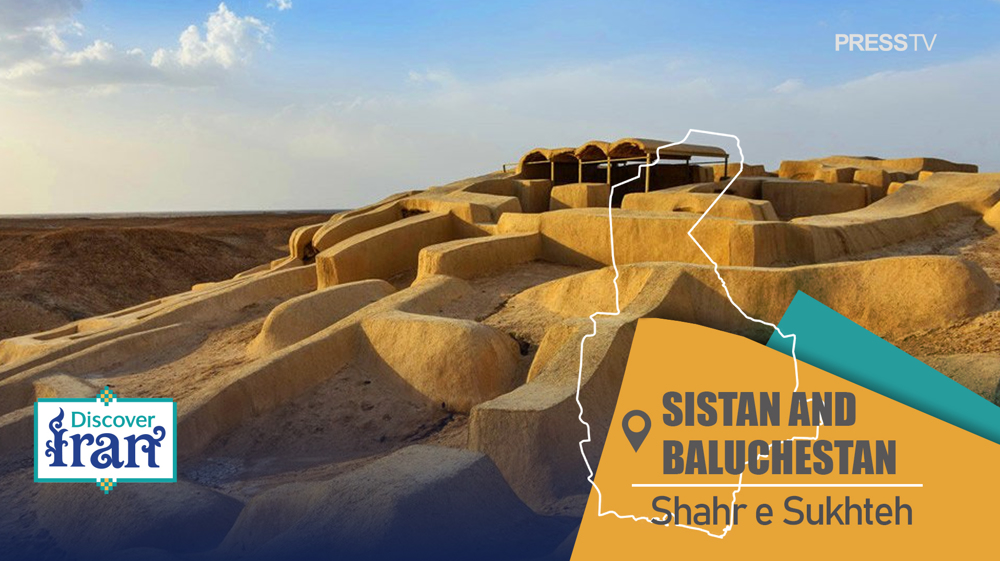
Discover Iran: Shahr-e Sukhteh, a Bronze Age marvel of urban planning, artistry and trade
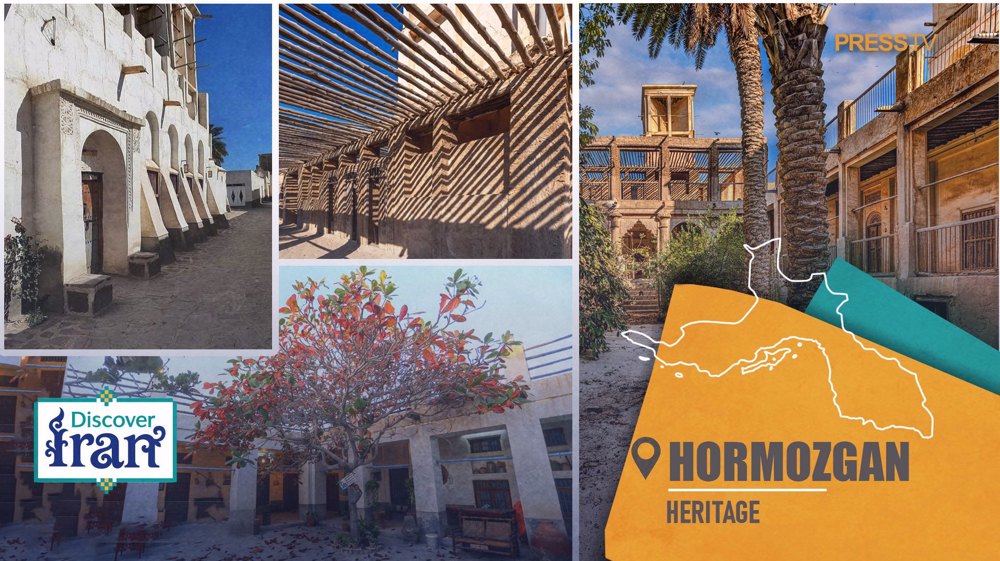
Discover Iran: Hormozgan’s architecture, where climate ingenuity meets maritime heritage

Religious coexistence in Iran


Iran Armed Forces shoot down US F-15 fighter jet near Kuwait border
IRGC, Army launch fresh waves of missile strikes against Israeli, US targets
Red Crescent Society: 555 people killed across Iran in US-Israeli onslaughts
Operational concerns delayed US-Israeli aggression against Iran for a week: Report
Iran slams Israeli attacks on Lebanon, warn UNSC’s inaction to embolden regime
Iran says has ‘no choice’ but to fight back, holds no enmity toward American people
Bahraini police assaults crowds mourning loss of Ayatollah Khamenei
Iran posed no imminent threat to US: Pentagon tells Congress




 PressTV NEWSLETTER now
 This makes it easy to access the Press TV website