Europe toughened stance after Iran-IAEA agreement: Iran nuclear chief
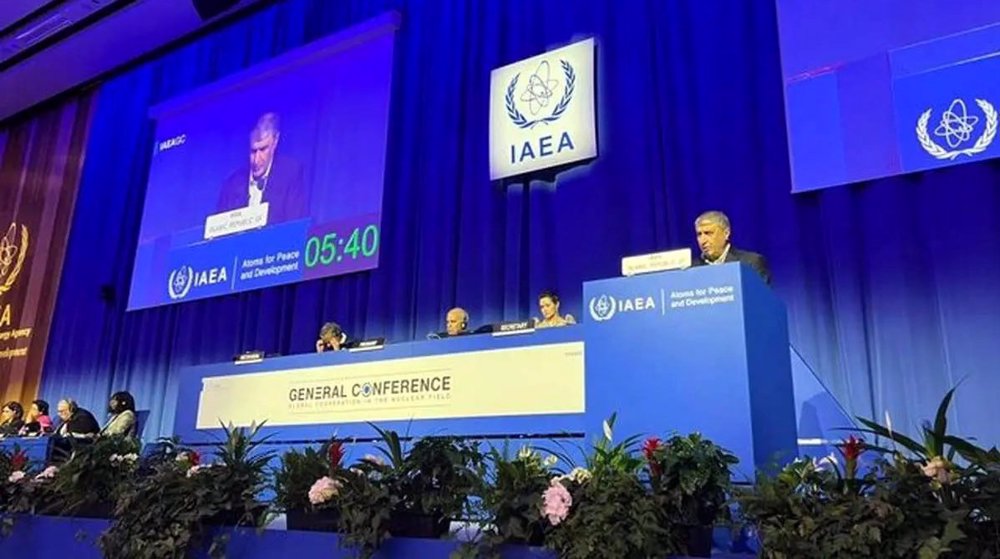
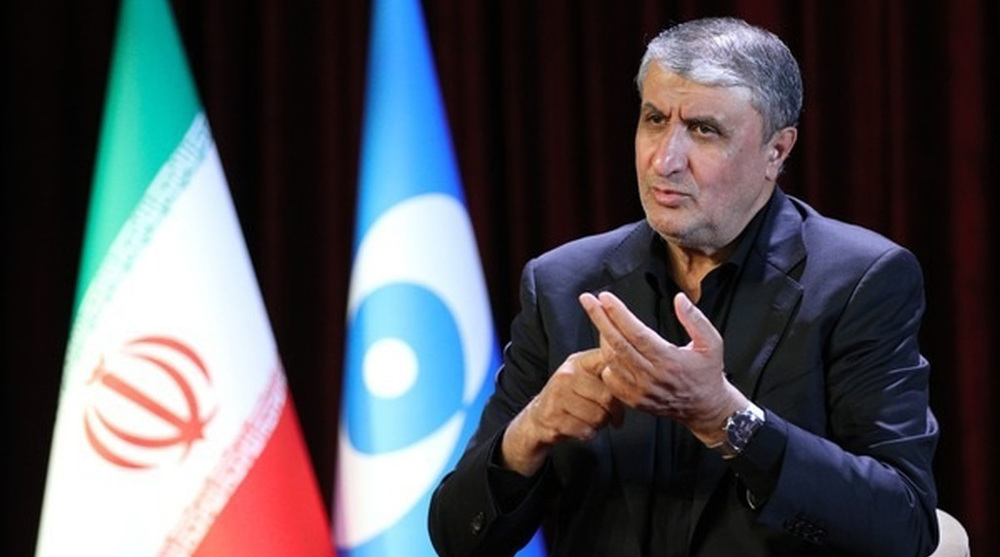
The head of the Atomic Energy Organization of Iran (AEOI) has said that from the moment Iran and the International Atomic Energy Agency (IAEA) signed their agreement, European countries adopted “new and more rigid positions.”
On September 9, Iran's Foreign Minister Minister Abbas Araghchi and IAEA Director General Rafael Grossi reached an agreement on practical modalities to resume cooperation after a meeting in the Egyptian capital of Cairo.
“European countries had consistently cited Iran’s cooperation with the agency as one of their primary conditions,” AEOI head Mohammad Eslami said at the end of his trip to Vienna, where he attended and addressed the 69th IAEA General Conference, held from September 15 to 19.
“However, precisely from the moment the agreement was signed between our esteemed Foreign Minister [Abbas Araghchi] and the IAEA Director General [Rafael Grossi], we witnessed newer and more rigid positions from them,” he added.
Eslami was referring to France, Britain, and Germany notifying the UN Security Council of their decision to invoke the so-called snapback mechanism—a process to reinstate all UN sanctions against Iran within 30 days.
On June 25, the Iranian Parliament unanimously passed legislation requiring the government to suspend all cooperation with the IAEA.
It came a day after Iran, through its successful retaliatory operations, managed to impose a halt to Israeli-US aggression that also targeted three of the country’s nuclear sites in a clear violation of international law and the Nuclear Non-Proliferation Treaty (NPT).
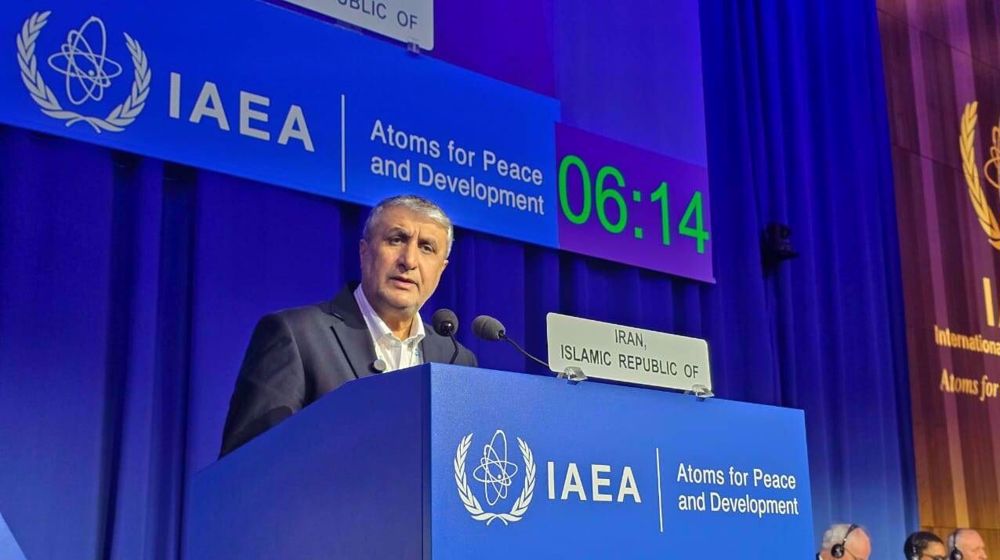
Eslami stated that Iran’s “emphasis is on the necessity of defining a new procedure within the safeguards system,” arguing that a mechanism for military attacks on nuclear sites “has not been foreseen until now.”
He underscored that it must be determined “how the inspection regime should operate” in such a scenario, especially given that Iran must also adhere to a parliamentary law mandating a specific framework for its nuclear activities.
Elsewhere in his remarks, the AEOI head noted that Iran’s presence at the General Conference was essential “given the conditions created by American and Zionist actors through their psychological, media, and political operations, and the extensive pressure they are exerting against our country.”
Eslami added that Iran’s presence was necessary “to explain our country’s situation” and “to raise the damages inflicted upon international law, the safeguards system, and the Agency.”
On Monday, Eslami said Iran has proposed a resolution to the UN atomic agency demanding a global ban on military attacks against nuclear installations, in response to unprovoked strikes by Israel and the United States on its facilities.
Iran neither intimidated by threats nor cowed by displays of power: Deputy FM
From toppling Tehran to low gas prices: Trump's endless climbdown continues
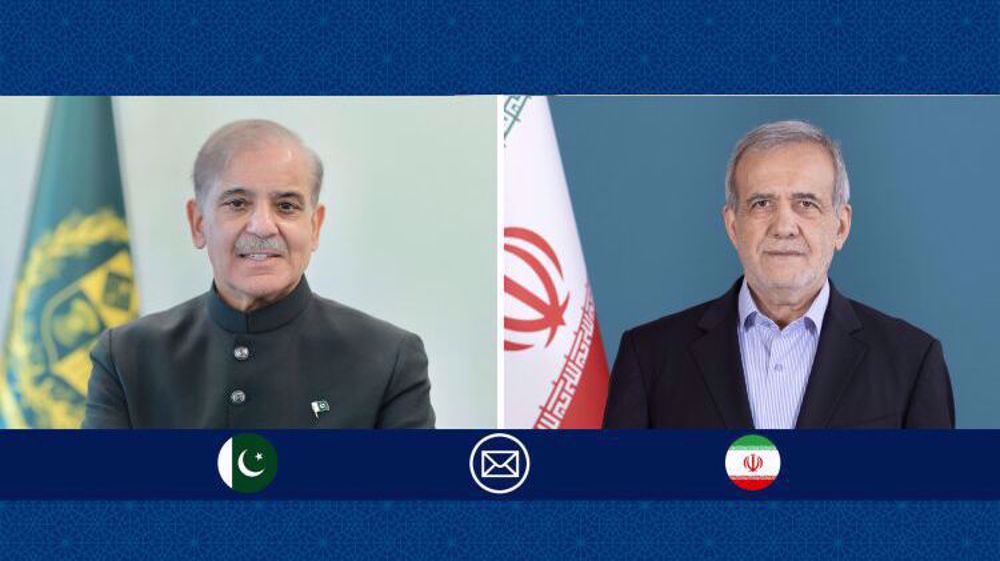
Pezeshkian: Iran’s, Pakistan’s interests more closely intertwined than ever


Israeli forces detain Palestinian newlywed couple, storm wedding hall
VIDEO | Press TV's news headlines
Qalibaf says he halted talks, warned of immediate strike after Israeli assault on Dahiyeh
Pakistan celebrates 79 years of independence
Iran’s Intelligence Ministry demands answers from France over diplomats’ ‘illegal’ activities
US Navy scrambles to deploy ship to replace USS Lincoln aircraft carrier: Report
US foreign policy regarding Iran, region driven by 'extreme reliance on lies': FM spokesman
Judiciary chief to Trump: Iran is owner and ruler of Strait of Hormuz



 PressTV NEWSLETTER
now
PressTV NEWSLETTER
now
 This makes it easy to access the Press TV website
