US delegation conveyed ‘Israeli diktat’ to Lebanon, says veteran Lebanese Druze leader

Veteran Lebanese politician and Druze leader Walid Jumblatt has condemned a US-backed initiative for the disarmament of the Hezbollah resistance movement, stating that a US delegation visiting Beirut this week brought “an Israeli diktat that forces us to surrender.”
“Disarm Hezbollah, and then we will see how to convince the Israelis to withdraw,” Jumblatt said in an interview with the French-language daily newspaper L’Orient-Le Jour on Friday.
The two-day visit, which began on Tuesday, included meetings with Lebanese President Joseph Aoun and Prime Minister Nawaf Salam.
The US team comprised senior senators Jeanne Shaheen and Lindsey Graham, Rep. Joe Wilson, the United States ambassador to Turkey and the special envoy for Syria, Tom Barrack, and the deputy special presidential envoy to West Asia, Morgan Ortagus.
Talks focused on the Lebanese government’s pledge to restrict the possession of weapons solely to the state, and the complete withdrawal of Israeli troops from five Lebanese positions it occupied during the latest aggression on the Arab nation.
Jumblatt roundly dismissed “imposed surrender,” arguing that Lebanon must first prioritize the liberation of the occupied territories and the implementation of international resolutions.
“The focus on weapons will not be accepted by a large part of the Shia community,” he said, stressing that the solution lies in dialogue with Hezbollah.
“Its secretary-general, Sheikh Naim Qassem, is right when he says that the group’s weapons are the soul of its supporters,” a former head of the Progressive Socialist Party said.
He noted that Israel has strengthened its positions in southern Lebanon and stated that partial disarmament has already been accomplished south of the Litani River in accordance with UN resolutions.

Jumblatt also advocated for bolstering the Lebanese army through increased manpower, improved equipment, and higher salaries.
“The important thing is that Israeli withdrawal must proceed in parallel with any disarmament process,” he said, warning against repeating past episodes where the army was turned against the people.
On Wednesday, Hussein al-Khalil, a political advisor to the leader of Hezbollah, charged Washington, DC, with setting up “deadly traps” to incite conflict between the army and the resistance.
He took a swipe at the United States for attempting to undermine Lebanon’s defense capabilities and transform it into a colony of American-Israeli interests.
On August 7, the Lebanese government sanctioned the “objectives” of the US proposal aimed at disarming Hezbollah. Three days later, it revealed a “timeline for the movement’s disarmament,” stating that the Lebanese military would “develop a plan to place all weapons under state control by the conclusion of 2025.”
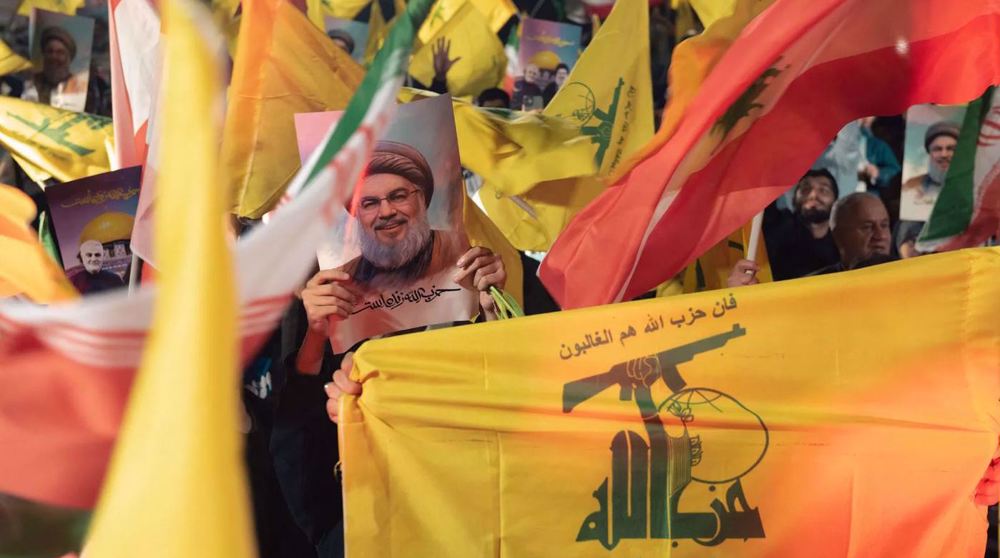
These developments have ignited extensive grassroots protests throughout Lebanon, where participants characterize Hezbollah’s defensive capabilities and strength as essential to the nation’s sovereignty and security.
Since its establishment in 1982, the movement has successfully resisted numerous attempts by the Israeli regime to invade the country, which has been occupying Shebaa Farms, a stretch of land adjacent to Lebanon’s border with the occupied Palestinian territories, since 1967.
On August 7, the Lebanese government approved the “objectives” of the US proposal for disarming Hezbollah, and three days later, it announced a “timeline for the movement’s disarmament,” saying the Lebanese military would “set out a plan to bring all weapons under state authority before the end of 2025.”
Such developments have sparked widespread grassroots protests across Lebanon, with the participants describing Hezbollah’s defensive power and prowess as indispensable to the country’s sovereignty and security.
Since its inception in 1982, the movement has fended off countless incursions into the country by the Israeli regime, which has been occupying Shebaa Farms, a strip of land along Lebanon’s border with the occupied Palestinian territories, since 1967.
Hezbollah has, in the meantime, pledged not to disarm, warning that if the Israeli regime succeeds in executing the disarmament plan through the United States, it would lead to Tel Aviv attempting to further extend its occupation.

Hezbollah's hell of deadly drones drives Israeli desperation to bomb Beirut
IRIB condemns killing of al-Alam journalist by Israel in southern Lebanon

Israeli strike kills former correspondent for Iran's al-Alam TV in southern Lebanon



Iran, Oman FMs discuss administration of Hormuz Strait in ‘very productive’ call
Italy: Protesters stage nationwide strike, demand end to Israeli genocide in Gaza
US will not be allowed to control Cuba's destiny through coercion, military threats: Diplomat
Iran’s active role in Eurasian bloc reflects its strong commitment to development: President
Champions again: Iran women’s volleyball retains CAVA title
Polls show Trump’s approval ratings drop to new lows
Chief negotiator: Iranian missiles win concessions, talks just make US understand
Hezbollah: 'No choice but resistance' as Israel expands Lebanon aggression




 PressTV NEWSLETTER now
  This makes it easy to access the Press TV website