Andean governments discuss inflow of Venezuelan migrants

A group of Andean countries have convened a meeting to discuss the inflow of Venezuelan economic migrants into their territories.
Officials from Colombia, Ecuador, and Peru, the countries of the Andean Community (CAN), gathered at a meeting in the Peruvian capital of Lima on Wednesday to discuss the issue.
They agreed to boost cooperation to address the migratory flow of the Venezuelan citizens, as border areas struggle to provide basic accommodation and services for the refugees.
In a press conference following the meeting, General Director of the CAN Jose Arrospide said that they called on “the Bolivarian Republic of Venezuela to facilitate the acquisition of identity and travel documents for its migrants.”
Venezuela, once Latin America’s richest nation, has been battling hyperinflation at levels unmatched by any other country in the recent past.
The United Nations (UN)’s International Organization for Migration (IOM) has already raised the alarm about the outflow of migrants from Venezuela. It has said that the influx of Venezuelans to other Latin American countries is creating a “crisis moment” similar to events involving refugees crossing the Mediterranean over to Europe.
IOM figures show that 2.3 million Venezuelans had already left the country in the 12 months to July, with South American neighbors hosting more than 1.5 million of them.
Colombia alone has received more than 870,000 Venezuelans in 2017-2018. It has finalized legal papers for 381,000, while 442,000 await processing. Of the more than 400,000 Venezuelans in Peru, just 178,000 have legal permission to stay or are being processed.

“Immigration counts, immigration helps development, and immigration helps integration in the region. That is why the objective is not to close borders. We will allow Venezuelan citizens to enter in an orderly and safe manner,” said Enrique Bustamente, the general director of Peruvian communities and consular issues.
In the past two weeks, both Ecuador and Peru have said that they would tighten entry rules for Venezuelans, demanding them to provide valid passports instead of just national ID cards. However, many Venezuelan refugees argue that they cannot obtain passports from their government.
In a televised speech on Wednesday, Venezuelan President Nicolas Maduro called on the country’s emigrating citizens to return home.

Last week, Maduro had accused right-wing governments of the region of luring Venezuelan citizens.
The Venezuelan president has launched a series of economic plans in a bid to curb the economic difficulties of the country. He recently dropped five zeros from the national currency. He has also launched a broad plan, known as “Return to the Homeland,” to counter mass emigration.
Some 100 people have returned.
Maduro has also announced an intention to raise the minimum wage by 3,000 percent. He has vowed that by taking the new measures, Venezuela “is going to experience an economic miracle.”
His government blames the United States and its sanctions for the economic crisis. The opposition, however, have blamed government mismanagement.
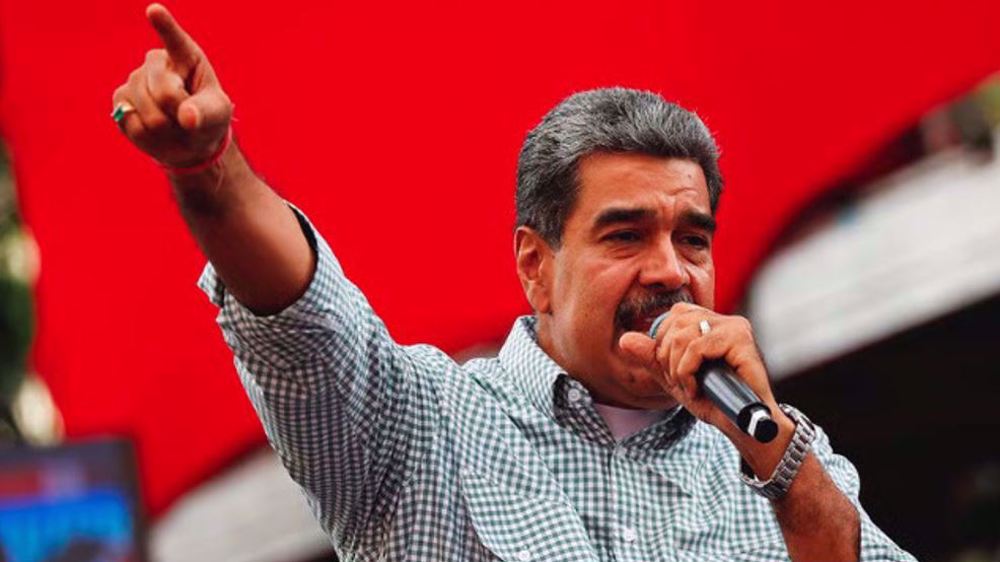
US cannot turn Venezuela into a colony and steal its natural resources: Maduro
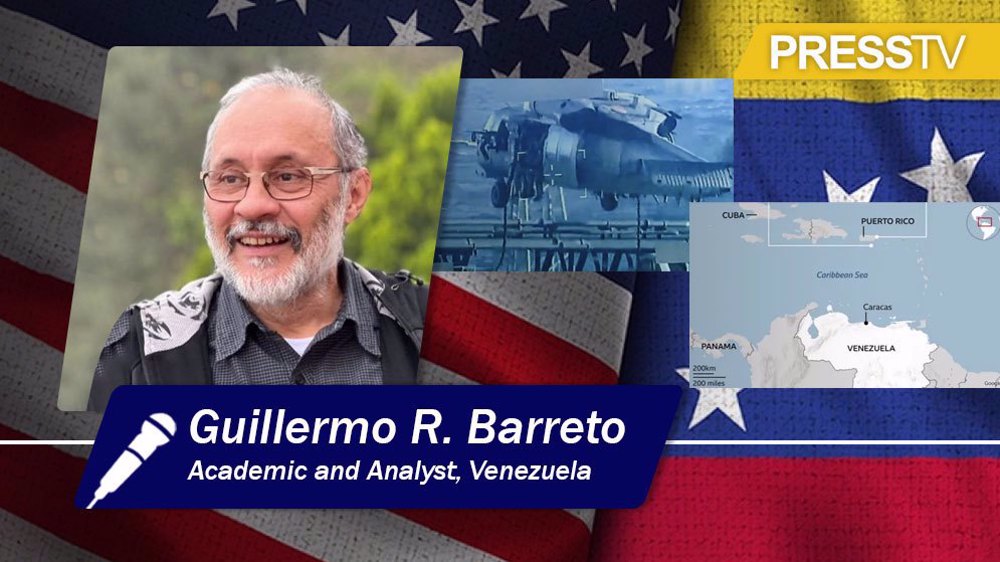
Venezuela's oil grab reveals Trump’s ‘supremacist, colonialist’ agenda: Analyst

UN experts condemn US blockade of Venezuela



Iran warns Israel’s recognition of Somaliland aims at destabilizing entire region
The Year That Was: ‘Warmongers’ who mocked intl. law to prop up wars in 2025
Forged by fire: Iran’s military preparedness at an all-time high after 12-day war
North Korea test launches long-range cruise missiles
Israeli forces abduct five youths in fresh southern Syria incursion
The Year That Was: 'Newsmakers' who shaped headlines in 2025 – for good or bad
Pentagon loses track of billions in arms sent to Israel during Gaza genocide: Report
Iran FM underlines Yemen's territorial integrity in talks with Saudi, Emirati counterparts




 PressTV NEWSLETTER now
 This makes it easy to access the Press TV website